

TAVI Procedure Mumbai
Trusted Experts in Advanced Heart Valve Care
At The Valve Clinic, led by Dr Ankur Phatarpekar, we are recognized as a leading center for TAVI procedure in Mumbai. Our expert heart valve team specializes in next-generation TAVI and TMVR procedures, offering effective and minimally invasive alternatives for patients who are unable to undergo open-heart surgery.
The home of next-generation TAVI and TMVR – effective and minimally invasive alternatives for patients unable to undergo open-heart surgery.
Dr. Ankur Phatarpekar
Heart Specialist (TAVI Proctor)
Dr. Ankur Phatarpekar is one of the best cardiologist in Mumbai, as well as a top, highly-qualified experienced consultant and a specialist in the Transcatheter Aortic Valve Replacement (TAVI) technique, Rotablation and Optical Coherence Tomography (OCT), and complex angioplasty procedures.
He serves as a proctor for Boston Scientific, Abbot, & Merill, communicating his expertise to interventional cardiologists nationwide.

Key Benefits of MitraClip Therapy
A Non-Surgical Heart Valve Replacement
- Minimally Invasive (Non-Surgical): No open-heart surgery required
- Tiny Incision: Reduced pain and minimal scarring
- Shorter hospital stay and quicker return to daily life
- Lower Risk: Ideal for high-risk or elderly patients
- Proven & Safe: Advanced technology with excellent clinical outcomes
Transcatheter Aortic Valve Implantation (TAVI) is a revolutionary non-surgical heart valve replacement procedure designed for patients suffering from severe aortic valve disease who may not be suitable for traditional open-heart surgery. This advanced treatment offers a safer, minimally invasive alternative with excellent clinical outcomes.
Who Is Eligible for TAVI?
Transcatheter Aortic Valve Implantation (TAVI) is primarily recommended for patients with severe aortic valve stenosis who may not be suitable candidates for open-heart surgery. It is especially beneficial for elderly patients and individuals with existing medical conditions that increase surgical risk.
TAVI for elderly patients has proven to be a safe and effective treatment option, offering symptom relief and improved quality of life without the trauma of conventional surgery. Patients above the age of 65, particularly those experiencing breathlessness, chest pain, fatigue, or frequent dizziness, may be considered for TAVI after proper evaluation.
Eligibility for TAVI is determined through a detailed assessment by a specialized heart team. This typically includes advanced cardiac imaging, echocardiography, CT scans, and a review of the patient’s overall health, lifestyle, and medical history. Patients with prior heart surgeries, lung disease, kidney issues, or other high-risk conditions may benefit significantly from TAVI.
However, not every patient is automatically eligible. The decision depends on valve anatomy, severity of symptoms, and overall clinical suitability. That’s why expert consultation is essential before proceeding.
If you or your loved one has been advised valve replacement or is experiencing worsening heart symptoms, early evaluation can make a life-changing difference.
How is TAVI or TAVR different from the standard valve replacement?
TAVI and TMVR are novel, (US) FDA Approved, technically advanced, and minimally invasive procedures. suitable for people with symptomatic aortic stenosis who are even low-risk or do not have the fitness to undergo standard valve replacement surgery.
Benefits of TAVI
- Minimally invasive procedure - done with an instrument inserted through a blood vessel
- Less painful than the traditional open-heart surgery
- The hospital stay is reduced to 48 hours
- Offers improved quality of life in patients who cannot undergo traditional surgical aortic valve replacement
Open-heart surgery
- Invasive – need the chest to be opened
- Comorbidities might render the patients unfit for surgery
- Longer hospital stays
- Complications are more likely
What is Aortic Stenosis?
Aortic stenosis is the narrowing of the valve between the left ventricle and the aorta. This is often caused by the build-up of calcium (mineral deposits) on the aortic valve’s leaflets. When the valve cannot fully open, less oxygen-rich blood flows to the body.
This forces the heart to work harder to pump blood and eventually can lead to heart failure. The symptoms of aortic valve stenosis include chest pain, lightheadedness, dizziness, fatigue, and shortness of breath.
Causes of Aortic Valve Stenosis?
Age
Calcium build-up
Genetic predisposition
Rheumatic heart disease
What is TAVI?
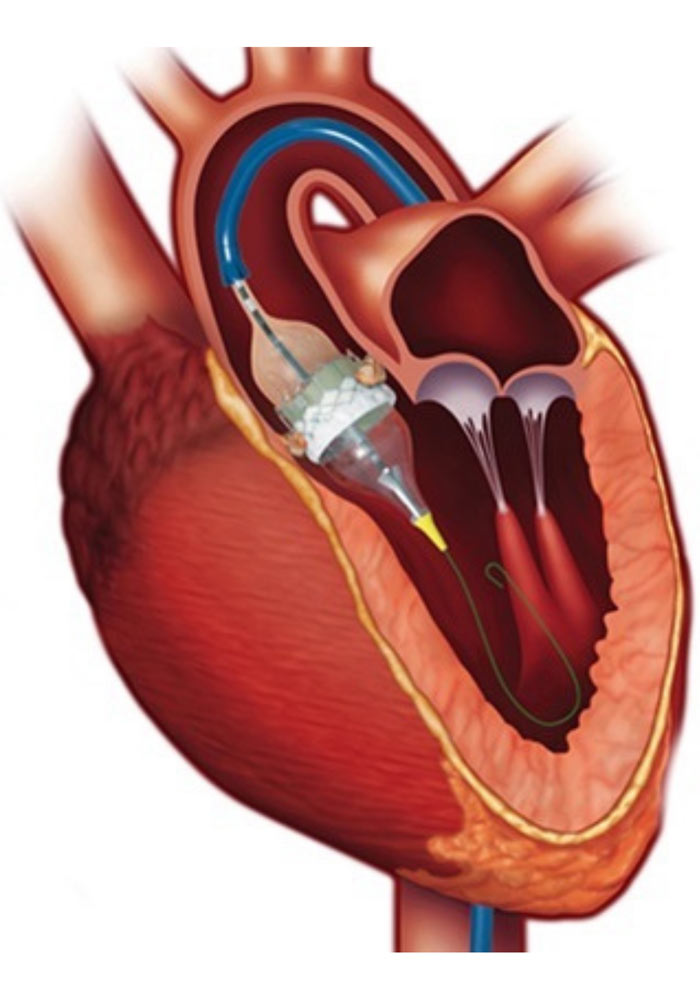
Transcatheter Aortic Valve Implantation (TAVI) is a minimally invasive heart valve procedure used to treat severe aortic valve disease without opening the chest. Instead of traditional open-heart surgery, the new valve is delivered through the arteries in the leg using a thin, flexible catheter.
The procedure is also known as Transcatheter Aortic Valve Replacement (TAVR). Similar to how a stent is placed inside an artery, the TAVI/TAVR approach allows a fully collapsible replacement valve to be guided safely to the heart. This advanced technique minimizes surgical trauma and significantly reduces recovery time.
TAVI is performed using advanced imaging and precision technology, ensuring accuracy and safety throughout the procedure. It is especially beneficial for elderly patients and those considered high-risk for open-heart surgery.
Types of TAVI Valves
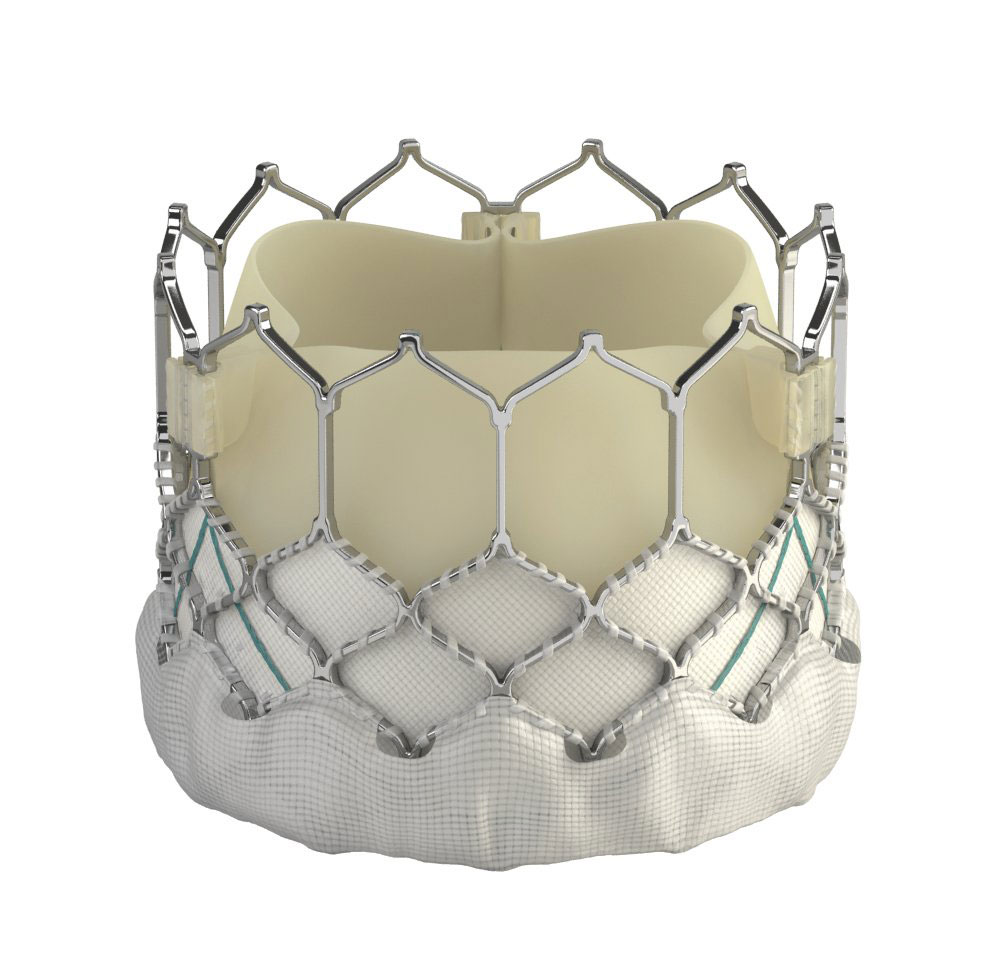
Balloon Expandable Valve
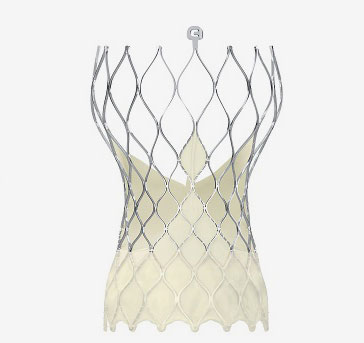
Self Expading Valve
Recovery & Outcomes
Recovery after TAVI is generally faster and smoother compared to traditional open-heart surgery. Since the procedure is minimally invasive and does not involve opening the chest, most patients experience less pain, minimal discomfort, and quicker healing.
Many patients are able to sit up and walk within 24 hours of the procedure. Hospital stays are usually shorter, often ranging from 2 to 4 days, depending on individual health conditions. Normal daily activities can typically be resumed within a few days to weeks, under medical guidance.
Clinical outcomes after TAVI are highly positive. Patients commonly experience immediate relief from symptoms such as breathlessness, chest pain, dizziness, and fatigue. Improved blood flow helps restore energy levels and significantly enhances overall quality of life.
The procedure is performed using advanced imaging and precision techniques, resulting in high success rates and long-lasting valve performance. Regular follow-ups and medication adherence help ensure optimal long-term results.
TAVI has become a globally accepted and trusted treatment option, particularly for elderly patients and those considered high-risk for open-heart surgery. With expert care and proper recovery planning, patients can return to an active and independent lifestyle.
Why Choose Our TAVI Team ?
01
Choosing the right medical team is critical for the success of a TAVI procedure. Our clinic is home to a leading TAVI team in Mumbai, bringing together highly experienced interventional cardiologists, cardiac surgeons, imaging specialists, and dedicated care coordinators — all working seamlessly for optimal patient outcomes.
02
Our team follows a heart team approach, ensuring every patient receives a personalized treatment plan based on detailed clinical evaluation and advanced diagnostic imaging. This collaborative model improves accuracy, safety, and long-term results.
03
We specialize exclusively in advanced valve therapies, including next-generation TAVI and TMVR procedures. With access to state-of-the-art technology and globally approved valve systems, we deliver world-class care that meets international standards.
04
Patient safety, transparency, and compassion are at the core of everything we do. From the first consultation to post-procedure recovery, our patients receive end-to-end support, clear communication, and expert guidance at every step.
Doctor & Team Credentials
At The Valve Clinic, advanced heart valve care is led by Dr. Ankur Phatarpekar, a highly respected TAVI specialist in Mumbai, supported by an experienced multidisciplinary cardiovascular team. Together, they deliver comprehensive, precision-driven care for patients undergoing Transcatheter Aortic Valve Replacement (TAVR).
Our specialists work in close collaboration to ensure every patient receives the safest and most effective treatment plan. The team includes expert interventional cardiologists, cardiac surgeons, radiologists, anesthesiologists, specialized nurses, and imaging experts, all dedicated exclusively to structural heart and valve therapies.
Recognized for clinical excellence, our team has performed the highest number of TAVI cases in the city, setting benchmarks in minimally invasive valve treatment. Beyond volume, we are known for innovation and leadership, with several landmark achievements to our credit.

The Team
At The Valve Clinic, cardiovascular specialists work as a team to provide proper comprehensive care for patients undergoing transcatheter aortic valve replacement (TAVR).
The team comprises of, but is not limited to, radiologists, nurses, anesthesiologists and cardiac surgeons. Meet the team performing the highest number of TAVI cases in the city.
A team with several more “firsts,” including,
- the first complete percutaneous subclavian access of TAVI
- the first double valve in mitral and aortic positions in the same setting in India
- the first Evolut pro in Western India
- the first Hydra commercial use in Mumbai
Why Choose The Valve Clinic ?

Best of experts in the field of Transcatheter Valve Therapies

Meticulous planning with round-the-clock, dedicated staff, not only to take care of operative but also pre & post-operative care

Only team in Western India having 2 proctors, who travel all around the country to proctor (teach) TAVI

We offer Cost-effective treatment
Patient FAQ's
Yes. TAVI is a globally proven and well-established procedure with high success rates. It is performed using advanced imaging and precision techniques, making it especially safe for elderly and high-risk patients when done by an experienced heart team.
The procedure usually takes 1–2 hours, depending on individual clinical factors. Most patients are awake or under mild anesthesia.
Recovery is typically faster than open-heart surgery. Many patients begin walking within 24 hours and are discharged within a few days.
In most cases, no. The TAVI valve is designed to function long-term. Your specialist will advise based on age, valve type, and health condition.
Yes. TAVI is commonly recommended for elderly patients who may not tolerate open-heart surgery.
For any emergencies or to book a consultation contact us on +91 90045 06263
Our website contains a wide variety of articles and blogs explaining the conditions, and the treatment modalities that are available to you. Feel free to peruse this content at your leisure.
Or if you need a deeper insight into what we offer, or if you are in doubt about anything, please feel free to fill the form below with your details as well as any queries or questions you may have about any aspect of the procedure, and we will send you an earnest reply as soon as possible.
TAVI is usually performed under local anesthesia or mild sedation. General anesthesia may be used only when clinically required.
TAVI valves are designed to be durable and can last 10–15 years or more, depending on patient age, lifestyle, and overall health.
As with any medical procedure, risks exist, but serious complications are uncommon when TAVI is performed by an experienced and specialized heart team.
Most patients need blood-thinning or antiplatelet medication for a period after the procedure. Your specialist will provide a personalized plan.
If you’re categorized as high-risk for surgeries, these procedures might give a sigh of relief for you as they do not need the high level of fitness needed for open surgery. Contact us today to book an appointment and get your condition evaluated.


- thevalveclinic@gmail.com
- 11th Floor, Diamond Plaza, Chhabildas Road, Dadar West, Mumbai – 400028