

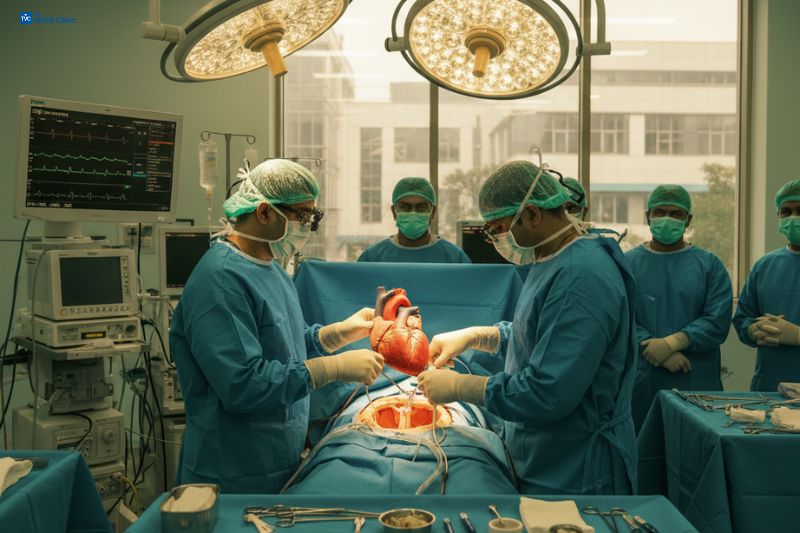
When a family member is battling end-stage heart failure, they’re faced with both emotional turmoil and financial strain. A heart transplant frequently represents the last chance for survival, but the central concern for most families is the cost.
Mumbai has emerged as one of India’s leading destinations for heart transplants, housing some of the country’s most experienced transplant teams and state-of-the-art cardiac care facilities. The heart transplant cost in India typically ranges between ₹20-35 lakhs, making it a viable option for many families who might find the procedure unaffordable abroad.
However, it’s important to understand that costs vary based on multiple factors, including hospital infrastructure, surgeon expertise, patient condition, post-operative care requirements, and medications. This guide will help families navigate these complexities with clarity and confidence.
What Is a Heart Transplant Procedure and Who Needs It?
A heart transplant is a surgical procedure where a diseased or failing heart is removed and replaced with a healthy heart from a deceased donor. This complex operation is reserved for patients with end-stage heart failure when all other treatment options have been exhausted.
Heart transplants are often needed for several reasons:
- Severe coronary artery disease.
- Cardiomyopathy, a disease affecting the heart muscle’s structure and function.
- Congenital heart defects.
- Repeated heart attacks causing permanent damage.
- Viral infections that affect the heart.
The need for a heart transplant arises when medications, lifestyle changes, and other surgeries, like bypass surgery or valve replacement, no longer work well.
Before a transplant is even considered, cardiologists perform thorough assessments to see if a patient qualifies. This matching process takes into account blood type, body size, and tissue compatibility to reduce the chances of rejection. Once a patient is deemed suitable, they’re added to a national waiting list, awaiting a compatible donor heart.
Heart Transplant Costs in India: A Closer Look
Knowing the financial aspects of heart transplant surgery allows families to prepare more effectively. The cost of a heart transplant in India fluctuates significantly depending on various elements, yet it remains considerably less expensive than in many developed nations.
Cost Breakdown:
| Cost Component | Estimated Range (₹) |
| Pre-transplant evaluation & tests | 1,50,000 – 3,00,000 |
| Surgery & surgeon fees | 10,00,000 – 15,00,000 |
| Hospital & ICU stay (3-4 weeks) | 5,00,000 – 10,00,000 |
| Immunosuppressant medications (first year) | 2,00,000 – 4,00,000 |
| Post-operative monitoring & follow-up | 1,00,000 – 2,00,000 |
| Total Average Cost | ₹20,00,000 – 35,00,000 |
The surgical expenses encompass the transplant team’s fees, operating room costs, anaesthesia, and the intricate surgery itself. Post-surgery, the intensive care unit stay is critical for observation, usually lasting a week to ten days, before moving to a general ward.
Several elements contribute to cost differences:
- The hospital’s location and the quality of its facilities.
- The experience of the surgeon and transplant team.
- The patient’s overall health and any existing medical conditions.
- Any complications that arise during or after the operation.
- The duration of the hospital stay.
- Type and dosage of immunosuppressant drugs required.
It’s worth noting that these figures represent the transplant phase. Lifelong medication and monitoring add ongoing expenses that families must budget for.
Heart Transplant Cost in Mumbai: What Makes It Different?
Mumbai stands out as a premier destination for heart transplant surgery in India. The heart transplant cost in Mumbai typically ranges from ₹22 lakhs to ₹35 lakhs, slightly higher than some other Indian cities but justified by the standard of care available. This investment reflects access to India’s most experienced cardiac surgeons, cutting-edge transplant facilities, and comprehensive postoperative care programs.
Mumbai’s concentration of seasoned transplant teams is truly exceptional. Many of these surgeons have received training abroad and have successfully carried out hundreds of transplants, significantly influencing patient outcomes and survival rates. For those coming from overseas, Mumbai’s accessibility and support services are a major draw.
A Closer Look at Heart Transplant Surgery
Knowing what to expect during a heart transplant can ease worries and help families prepare for the process.
- Before the surgery, you’ll be evaluated and placed on a waiting list:
If your cardiologist suggests a transplant, you’ll go through a range of tests over several weeks. - Once you’re approved, your name goes on the national organ allocation list:
The wait can be a long one, and it really depends on a few things: your blood type, body size, and how urgent your situation is. While you’re waiting, it’s crucial to stay available and do your best to stay healthy.
When a donor heart is found, you’ll get a call right away. The transplant team will check to make sure everything matches up and get ready for the operation. Time is vital; as donor hearts must be transplanted within 4-6 hours of retrieval. - The surgery:
Heart transplant surgery typically takes 4–6 hours. The patient is placed on a heart-lung bypass machine while the diseased heart is carefully removed. The donor heart is then precisely positioned and connected to the major blood vessels. Once all the connections are in place, the new heart is restarted. If everything goes according to plan, the patient is then slowly taken off the bypass machine. - Post-operative care begins immediately:
You’ll be in the ICU for a week to two weeks, under constant observation. The medical staff will be looking for any signs of rejection, managing your immunosuppression, and making sure all your organs are working as they should. Initially, you’ll need ventilator support, but this will be reduced as you get better.
Long-term, you’ll need to take immunosuppressant medications for the rest of your life to prevent rejection. Regular check-ups will include blood tests, echocardiograms, and occasional heart biopsies during the first year. This monitoring frequency decreases over time but never stops entirely.
Heart Transplant Success Rate and Survival Outcomes
One of the most critical questions that concerns families is the heart transplant success rate and long-term survival prospects. The data is genuinely encouraging.
Many leading heart transplant programs in India and worldwide now report favourable long-term outcomes after heart transplant surgery, with one-year survival commonly approaching 80%–90% in experienced centres. Research from a multi-centre Indian experience shows one-year survival at around 81%, while international registry data report similar figures in adults. Over the longer term, global registry statistics indicate that around 65–75% of patients are alive at five years and about 50–60% at ten years, reflecting improvements in surgical techniques and post-operative care. Indian center-specific reports also suggest that long-term survival outcomes are broadly comparable with international standards, with many programs reporting that more than half of transplant recipients are alive after ten years.
These statistics represent averages, and individual outcomes depend on multiple factors. Younger patients generally have better outcomes than older recipients. The patient’s overall health plays a role, too; those with fewer existing health issues generally fare better.
How well patients stick to their post-surgery regimen is a big deal for survival rates. Those who faithfully take their medications, keep up with follow-up appointments, and make the necessary lifestyle changes see much better results. Even small mistakes in taking immunosuppressants can lead to rejection.
Recovery, Lifestyle After Transplant, and Long-Term Costs
The process doesn’t stop with a successful heart transplant. Recovery follows a set timeline, with specific goals and costs at each point.
- Week 1-2 (ICU Phase):
The immediate post-operative period is the most critical. Patients remain in the ICU under continuous monitoring with ventilator support initially. The medical team manages pain, prevents infection, and watches closely for early rejection signs. - Weeks 3-4 (General Ward Recovery):
Once stable, patients transition to a step-down unit or general ward. Physical strength gradually returns, and cardiac rehabilitation begins with supervised walking and breathing exercises. Immunosuppressant medications are carefully adjusted based on blood levels. - Months 2-3 (Home Recovery):
After hospital discharge, patients enter home recovery while attending frequent outpatient follow-ups. Cardiac rehab programs are continued. During this time, the average monthly expenses for medications, consultations, and tests range from ₹75,000 to ₹150,000. - Months 4-12, the (Stabilisation Phase):
Follow-up appointments become less frequent, shifting to every other week and then monthly. Patients slowly resume their regular routines, pending medical approval. Immunosuppressant dosages might be modified. Monthly costs settle around ₹40,000 to ₹80,000 for medications and monitoring. - Second Year Onwards (Long-term Maintenance):
Quarterly follow-ups are standard unless complications emerge. Comprehensive annual evaluations, including echocardiograms, stress tests, and bloodwork, are also part of the process. The cost of immunosuppressants could see a slight reduction.
Patients should plan on setting aside ₹3-5 lakhs each year for continued care.
Lifestyle adjustments are key
A heart-healthy diet is now a priority, focussing on fresh foods and steering clear of too much salt and processed goods. Gentle exercise, guided by a doctor, is important for keeping the heart in good shape. Managing stress and getting enough sleep also contribute to overall well-being.
Preventing infections is still very important. At first, patients should stay away from crowded places and be very careful about hygiene while their immune systems are suppressed. Good dental care, vaccinations, and quick treatment of minor illnesses can help avoid serious problems.
Even with the ongoing expenses and the need for lifestyle changes, many patients feel the investment is worth it.
A successful transplant offers years of active living, enabling individuals to return to work, enjoy family time, and pursue meaningful activities.
Conclusion: Making an Informed Decision About Heart Transplant Surgery
Heart transplant surgery in Mumbai offers world-class medical care at costs significantly lower than international alternatives.
For families navigating this journey, thorough research and multiple consultations will provide the clarity needed to make confident decisions. Mumbai’s medical infrastructure and transplant expertise continue to offer renewed hope and quality of life to those facing end-stage heart failure.
Frequently Asked Questions
- What is the heart transplant cost in India?
The heart transplant cost in India typically ranges between ₹20–35 lakhs, depending on the hospital, patient condition, duration of ICU stay, and post-operative medication requirements. - Why does the heart transplant cost in India vary so widely between patients?
The heart transplant cost in India varies based on factors such as patient health, length of ICU stay, post-surgery complications, medication needs, and the level of ongoing monitoring required after discharge. - How safe is heart transplant surgery in India?
Heart transplant surgery is considered safe when performed at experience centres. Leading Indian hospitals report outcomes that are comparable to international standards, especially in carefully selected patients. - What does the heart transplant procedure involve?
The heart transplant procedure includes removing the failing heart, implanting a donor heart, and long-term immunosuppressive therapy to prevent rejection, followed by structured medical monitoring. - What is the success rate of heart transplants in India?
The heart transplant success rate in experienced Indian centres shows one-year survival approaching 80–90%, with long-term outcomes broadly comparable to global registry data.
References:
Wilhelm, M.J., 2015. Long-term outcome following heart transplantation: current perspective. Journal of Thoracic Disease, 7(3), pp.549–551. Available at: https://pmc.ncbi.nlm.nih.gov/articles/PMC4387387/ [Accessed 22 Jan. 2026].
Vaidya, G., 2021. Heart transplantation in India. Indian Heart Journal, 73(4), pp.518–520. Available at: https://pmc.ncbi.nlm.nih.gov/articles/PMC8424265/ [Accessed 22 Jan. 2026].
Balakrishnan, K.R. et al., 2020. Medium term results following heart transplantation for end stage heart failure: A single center experience of 257 patients. Indian Heart Journal, 72 Nelson Manickam Rd, Chennai, pp. [online]. Available at: https://pmc.ncbi.nlm.nih.gov/articles/PMC7772589/ [Accessed 22 Jan. 2026].