


If you or a loved one has been advised TAVI surgery in Mumbai, it’s completely normal to feel hopeful, yet a little anxious about what happens after the procedure. Questions like “How long will recovery take?”, “Will they be able to walk again?”, or “What precautions should we take?” often come up during these discussions.
The encouraging truth is that recovery after TAVI is usually faster and smoother than open-heart valve surgery, especially when it is performed by an experienced structural heart team. This guide explains exactly what to expect during hospital stay and recovery at home, and how families can support the patient in the weeks that follow.
What Recovery Looks Like Immediately After TAVI
Recovery after TAVI begins immediately after the procedure is completed. Once the new valve is successfully implanted, the patient is shifted to a monitored recovery unit or ICU setting. This is standard, even when everything goes smoothly, the goal is close observation in the first few hours.
In the early period after TAVI, patients may feel:
- Mild grogginess (due to anaesthesia or sedation)
- Slight discomfort at the puncture site (usually the groin)
- Fatigue or weakness
- Mild throat irritation (if a breathing tube was used)
These are expected and not usually a cause for concern. What matters most in the first 24 hours is safety, monitoring, and stabilisation.
The First 24–48 Hours: Walking Begins Earlier Than You Think
One of the biggest advantages of TAVI is early mobilisation. In many cases, patients are encouraged to sit up and start walking within the first day, based on their condition and doctor’s advice.
In most hospitals, the early recovery flow looks like this:
- 6–12 hours: Vitals monitoring, rest, pain control
- 12–24 hours: Sitting up in bed, light fluids or meals
- 24–48 hours: Walking short distances with assistance
Early walking isn’t just about confidence, it helps prevent complications such as blood clots, lung congestion, and prolonged weakness.
If the patient is elderly, the team may introduce mobility slowly and safely. The priority is not speed, it’s steady improvement.
How Long Does the Hospital Stay After TAVI?
Most patients are discharged within 2 to 4 days, depending on their overall health status.
A typical timeline:
- Day 0: Procedure + monitoring
- Day 1: Walk, oral diet, medication planning
- Day 2: Further monitoring + discharge planning
- Day 3–4: Discharge (if required in complex/high-risk cases)
Before discharge, the medical team usually confirms:
- Stable heart rhythm and blood pressure
- No concerning bleeding from the access site
- Patient can walk safely
- Medications are clear
- Follow-up plan is fixed
Home Recovery After TAVI: The First 2 Weeks
Once home, recovery continues but most patients feel noticeable improvement in symptoms such as breathlessness or fatigue fairly early. Still, the body needs time to adjust, and families play a major role in ensuring a safe and smooth recovery.
In the first two weeks, focus on:
1) Medications
This is non-negotiable. After TAVI, medications may include:
- Blood thinners/antiplatelets (as advised)
- BP medicines
- Heart failure support medicines (if needed)
Never stop or change medicine without consulting the doctor.
2) Walking Routine
Walking is the best recovery exercise.
- Start with 5–10 minutes
- 2–3 times a day
- Gradually increase duration
The goal is not fitness, it’s circulation, lung expansion, and confidence.
3) Rest and Sleep
Fatigue is common after TAVI even when the valve is functioning well. Encourage:
- Midday rest
- Early bedtime
- Avoiding stress or physical strain
4) Wound/Access Site Care
Keep the puncture site clean and dry. Avoid rubbing, applying creams, or self-bandaging unless advised.
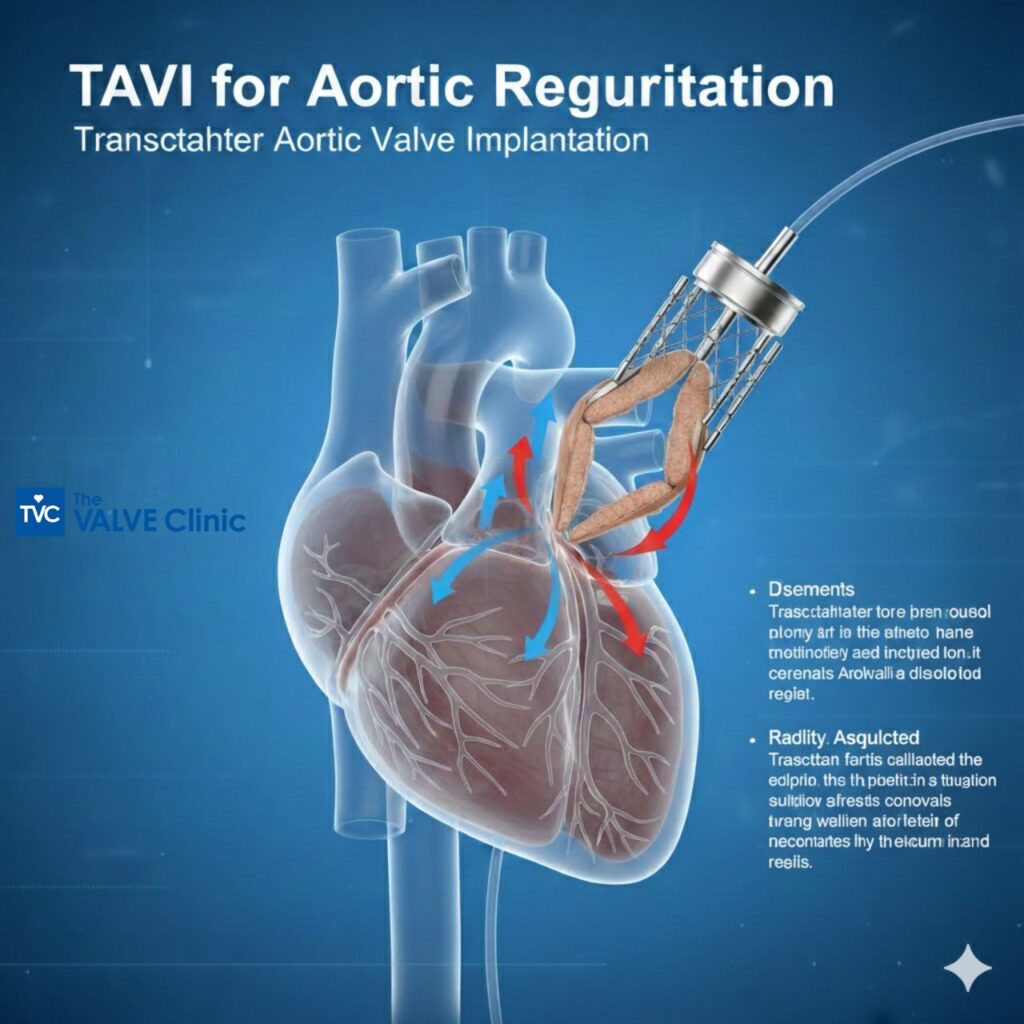
What to Avoid in Recovery After TAVI for Aortic Regurgitation (First 4–6 Weeks)
Even though TAVI for aortic regurgitation recovery is quicker than surgery, the heart still needs protection during the early healing window.
Avoid:
- Heavy lifting (e.g., lifting buckets, luggage, gym weights)
- Straining during bowel movements
- Long travel without clearance
- Smoking and alcohol
- Driving (for at least 1 week or as advised)
- Climbing too many stairs repeatedly
Patients can usually return to normal activities gradually with the doctor’s clearance based on follow-up findings.
Warning Signs After TAVI: When to Seek Help
Families should monitor the patient for early warning signs. While most recoveries are smooth, it’s important not to ignore symptoms.
Seek medical help if the patient experiences:
- Sudden breathlessness or worsening fatigue
- Chest pain not relieved by rest
- Fainting or dizziness
- Fever or chills
- Bleeding/swelling at puncture site
- Fast or irregular heartbeat
- Swelling of legs that suddenly worsens
It’s always better to ask early rather than wait.
Is TAVI a Serious Procedure? (In Simple Words)
Yes it is a major heart procedure, because it involves valve replacement. However, it is significantly less invasive than open-heart surgery.
Most patients recover faster because:
- The chest is not opened
- The heart-lung bypass machine is avoided
- The procedure is catheter-guided
- Hospital stay is shorter
Complications are uncommon when performed by an experienced team, but the procedure still requires careful planning, imaging, and follow-up.
Recovery Improvements Patients Commonly Feel
Many patients report:
- Easier breathing within days
- Improved energy within 1–2 weeks
- Increased walking capacity
- Better sleep and reduced anxiety
- Reduced dizziness or chest pressure
The most meaningful recovery outcome is often quality of life patients go from being limited by breathlessness to regaining independence.
How The Valve Clinic (TAVI Specialists in Mumbai) Support Your Recovery
Recovery doesn’t end at discharge, real trust is built by what happens after.
At The Valve Clinic, post-procedure support is designed to be structured and reassuring:
- Clear discharge and medication counselling
- Guidance on activity, diet, walking routine
- Help with follow-up scheduling and reports
- Coordination with the treating hospital team
- Support for patient and family questions
Patients and families should never feel they are “on their own” once they’re home. A confident recovery comes from clarity, communication, and continuity of care.
FAQs: Recovery After TAVI Surgery in Mumbai
- How soon can the patient walk after TAVI?
Usually within 24 hours, with assistance. - When can normal food be resumed?
Often within the first day, depending on recovery. - Is weakness normal after TAVI?
Yes. Fatigue is common and improves gradually. - How often are follow-ups needed?
Typically at 1 week, 1 month, and as advised. - Can patients travel after TAVI?
Yes, but only after medical clearance.
Next Step
If you or a loved one has been advised valve replacement or is exploring minimally invasive options like TAVI, the best first step is a structured evaluation with a structural heart team. Consulting with TAVI Specialists in Mumbai helps ensure the patient is eligible, safe, and supported through the entire journey from procedure to recovery.