

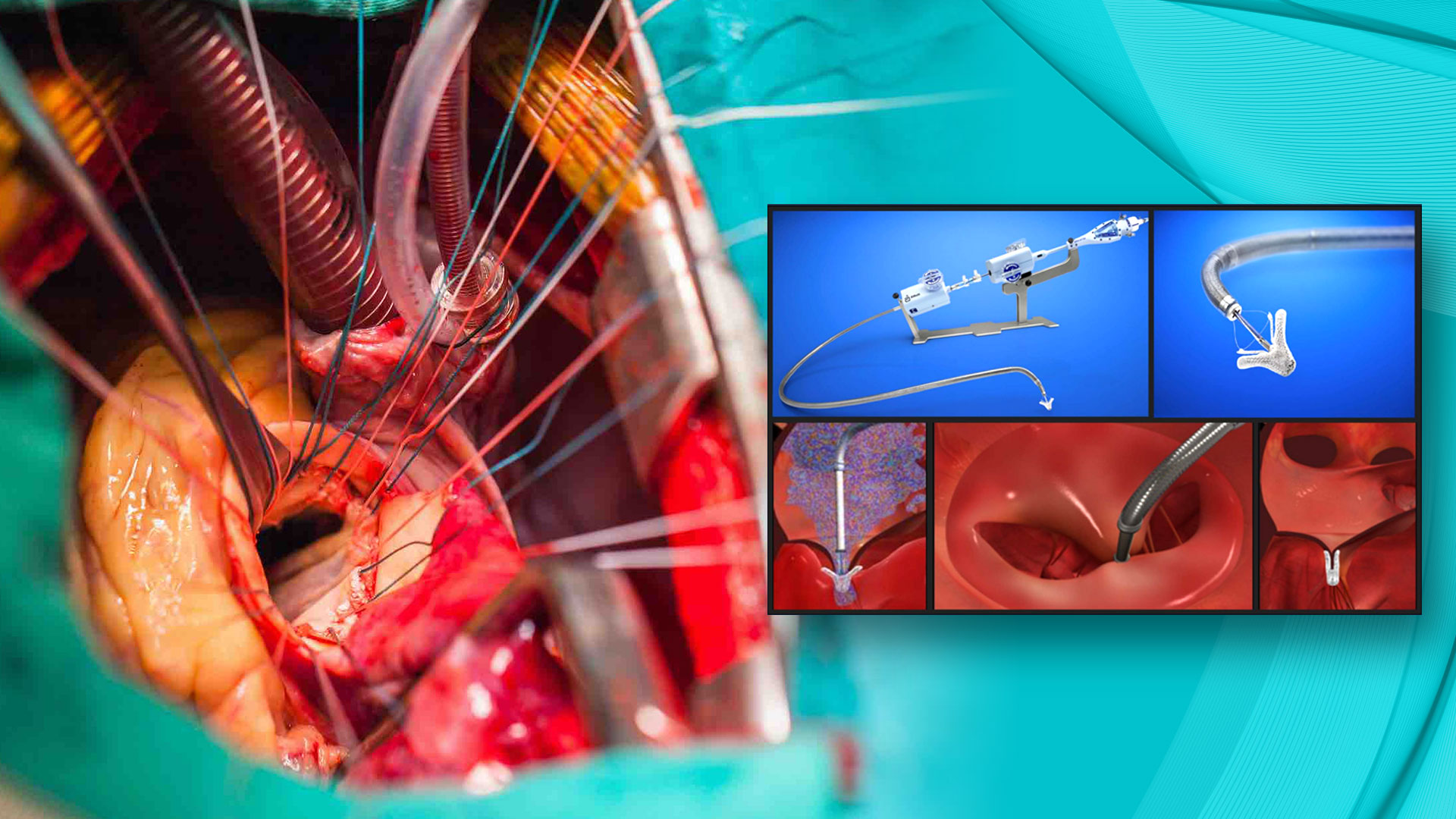
MitraClip is a minimally invasive treatment designed to help patients with mitral regurgitation, a condition in which the heart’s mitral valve does not close properly and allows blood to flow backward. Instead of requiring open-heart surgery, MitraClip is delivered through a thin tube inserted via a vein in the leg and guided to the heart, where it clips together a portion of the mitral valve to reduce leakage. This procedure is typically recommended for patients who are considered high risk for traditional surgery. By improving blood flow and reducing symptoms such as shortness of breath and fatigue, MitraClip can enhance quality of life and support better heart function with a shorter recovery time compared to conventional surgical approaches.
How MitraClip Offers a Minimally Invasive Option for Treating Mitral Regurgitation
Most patients don’t describe it as “valve leakage.”
- They say they’re more tired than usual.
- They say the swelling in the legs wasn’t there before.
- They say walking across the room now feels different.
- Heavier.
Sometimes they are told, almost casually, “Your mitral valve is leaking.”
It sounds mechanical.
But inside the heart, it changes everything.
What Does It Mean When the Mitral Valve Is Leaking?
The mitral valve sits between the left upper and lower chambers of the heart. Its job is simple: allow blood to move forward, then close tightly so it doesn’t flow backward.
In mitral regurgitation, the valve does not close completely. Blood leaks backward with every heartbeat.
At first, the heart compensates.
- It pumps harder.
- It stretches slightly.
- It adapts.
But over time, that adaptation becomes strain.
Fluid can build up in the lungs.
Fatigue becomes persistent.
Breathlessness appears — first with exertion, then sometimes even at rest.
Not every leak is dangerous. But severe leaks rarely stay silent forever.
Why Not Everyone With Mitral Regurgitation Needs Surgery Immediately
One of the most important truths about mitral valve disease is this:
Severity on a report does not automatically equal urgency for surgery.
Some patients with moderate leakage may be monitored for years.
Others with severe leakage but no symptoms may still be watched carefully — depending on heart function and structural changes.
And in some patients, symptoms are not caused by the valve alone. Heart muscle weakness, rhythm disturbances, or long-standing hypertension can contribute.
This is where evaluation becomes critical.
The goal is not to fix a report.
The goal is to treat the right problem
When Does Treatment Become Necessary?
Treatment is usually considered when:
- Leakage is severe
- Symptoms are clearly affecting daily life
- The heart begins to enlarge or weaken
- Lung pressures start rising
Traditionally, this meant open-heart surgery to repair or replace the valve.
Surgery remains an excellent option for many patients — especially younger individuals with suitable anatomy.
But not everyone is a good surgical candidate.
And that is where catheter-based options such as MitraClip come into discussion.
What Is MitraClip (TEER)?
MitraClip, technically called Transcatheter Edge-to-Edge Repair (TEER), is a minimally invasive procedure used to reduce mitral valve leakage.
Instead of opening the chest, a catheter is guided to the heart through a blood vessel, usually from the groin.
A small clip is placed on the valve leaflets to help them close more effectively, reducing the backward leak.
The heart continues beating during the procedure.
There is no sternotomy.
But it is still a serious cardiac intervention — and patient selection is everything.
When Is MitraClip Considered Safer Than Surgery?
MitraClip is generally considered when surgery carries higher risk.
This may include patients who are:
- Older
- Living with multiple medical conditions
- Have weakened heart muscle
- Have had prior heart surgeries
- Considered high-risk for prolonged anaesthesia
However, anatomy matters just as much as risk.
The valve structure must allow the clip to work effectively.
If the leak is due to extensive calcification or complex structural damage, surgery may still be the better long-term solution.
Minimally invasive is not automatically superior.
Appropriate is superior.
A Patient Perspective
One patient delayed evaluation for months.
Not because symptoms were mild.
But because he feared open-heart surgery.
He had already reduced his walking. He avoided family outings that required stairs. By evening, he felt exhausted in a way that felt unfamiliar.
When evaluated, severe mitral regurgitation was confirmed. Surgery was discussed — but so were risks. His age, diabetes, and prior cardiac history increased surgical risk significantly.
After detailed imaging and heart team discussion, MitraClip was considered suitable.
Recovery was not dramatic. It was gradual.
Breathing improved over weeks. Swelling reduced slowly. Medications were adjusted. Follow-up visits continued.
The procedure did not make him “young again.”
It made daily life manageable again.
That was the goal.
What Recovery After MitraClip Usually Looks Like
Most patients:
- Stay in hospital for a short period
- Resume light activity within days
- Notice gradual improvement over weeks
Fatigue may not disappear immediately.
Fluid balance and medications often need adjustment.
Regular follow-up echocardiograms are essential to monitor valve function.
The procedure reduces leakage — it does not erase heart disease.
Ongoing care remains important.
When Is MitraClip Not the Right Option?
MitraClip may not be suitable when:
- The valve anatomy does not allow adequate clip placement
- Leakage is too complex
- Long-term durability would be compromised
- Surgical repair offers better expected outcomes
This is why structured evaluation by a structural heart team is critical.
At The Valve Clinic, decisions are made collaboratively — interventional cardiologists, imaging specialists, and surgeons together — to determine the safest and most durable path forward.
The goal is not to avoid surgery at all costs.
The goal is to choose wisely.
When Should You Seek Evaluation?
Consider specialist evaluation if you notice:
- Increasing breathlessness
- Swelling in the legs
- Fatigue that limits routine activities
- Repeated hospital admissions for heart failure
Or if you have been advised surgery but are unsure about the risk.
Clarity reduces anxiety.
Sometimes the right answer is surgery.
Sometimes it is MitraClip.
Sometimes it is continued monitoring.
What matters is understanding which applies to you.
Frequently Asked Questions
Q. Is MitraClip permanent?
It reduces leakage significantly, but durability depends on valve anatomy and overall heart health. Ongoing follow-up is required.
Q. Is MitraClip safer than open-heart surgery?
In high-risk patients, it may offer lower procedural risk. In others, surgery may provide better long-term results.
Q. How long does the procedure take?
Typically a few hours, including preparation and monitoring.
Q. Will I need medicines after MitraClip?
Yes. Most patients continue heart medications, adjusted as needed.
Mitral valve leakage does not always demand the same solution.
But it always deserves careful evaluation.