
Told your parent needs open heart surgery? A second opinion could change everything.
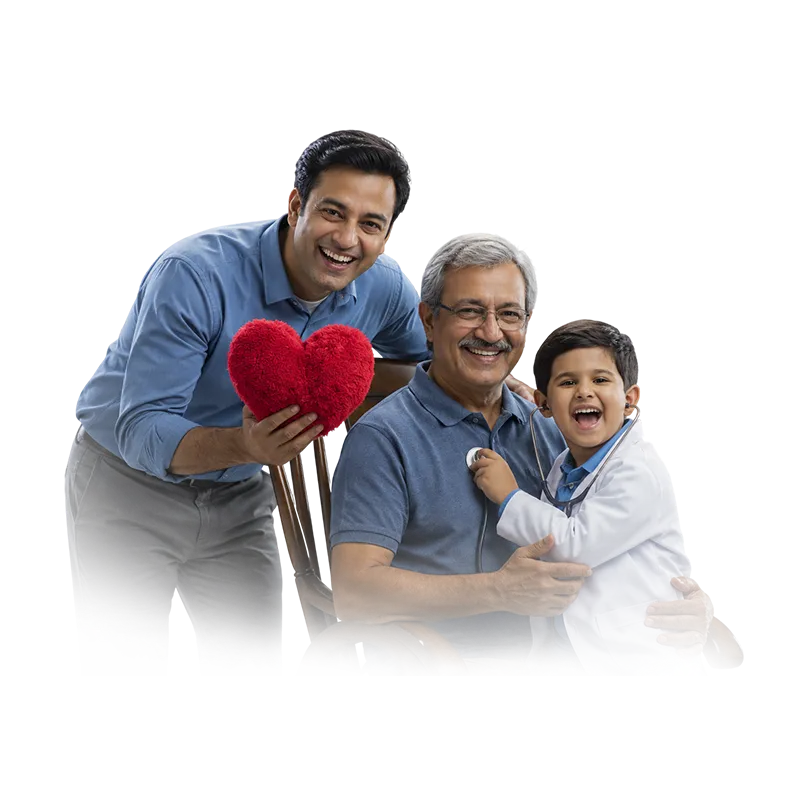
You are being thorough.
A diagnosis of severe heart valve disease — and a recommendation for open heart surgery — is one of the most significant medical decisions a family will face. The words carry weight: sternotomy, bypass, weeks of recovery, risks of infection, stroke, and more. And yet, for a significant number of patients referred to The Valve Clinic for a second opinion, there is a minimally invasive alternative that the first assessment did not offer — or did not fully explore.
A second opinion is not about doubting your doctor. It is about making the most consequential medical decision of your family's life with complete information. In medicine, second opinions for complex procedures are not only accepted — they are encouraged. Major cardiac societies worldwide recognise that for complex structural heart procedures, a multidisciplinary team review is best practice, not an exception.
At The Valve Clinic, we regularly assess patients referred from other cardiologists and hospitals across Mumbai, Pune, and Maharashtra. In a meaningful number of cases, we identify minimally invasive alternatives — TAVI, MitraClip (TEER), BMV, or valve-in-valve procedures — that had not been fully evaluated. In others, we confirm surgery is appropriate. Either outcome gives families the confidence to move forward with clarity.
When is a second opinion most important?
Your parent or loved one may benefit most from a specialist second opinion if any of the following apply:
None of these situations require justification. A second opinion is your right as a patient and family — and most experienced cardiologists welcome it
What The Valve Clinic assesses in a second opinion.
A second opinion at TVC is not a repeat of the same assessment. Our team brings a specific lens: is there a catheter-based, minimally invasive option that reduces or eliminates the need for open surgery?
Review of your existing reports
We review echocardiograms, CT scans, catheterisation reports, and previous clinical notes. Bring everything you have — but come even if you only have some of it.
Independent imaging interpretation where needed
Where our team needs to form its own view, we arrange echo or CT imaging and interpret it through a structural heart specialist's eyes — specifically asking whether catheter-based access and valve delivery is anatomically feasible.
Multidisciplinary Heart Team discussion
Your case is reviewed collectively by interventional cardiologists, cardiac surgeons, and imaging specialists. This is not one doctor's opinion — it is a team assessment, which is the standard recommended by international cardiac guidelines for all structural heart decisions.
A clear, honest recommendation — in writing
We will tell you plainly whether TAVI, MitraClip, TMVR, BMV, or open surgery is the most appropriate path for your parent's specific situation. If surgery is the correct answer, we will say so. We provide a written summary of our assessment that you can take back to your primary cardiologist or use to plan next steps with confidence.
Common scenarios we see for second opinions
Scenario 1
"My father is 80 with diabetes and kidney disease. We were told open heart surgery is too risky — but no alternative was offered."
This is the most common scenario at TVC. Elderly patients with multiple conditions are often told surgery is too risky — and then left without a plan. In many cases, TAVI or MitraClip is technically feasible and carries significantly less physiological burden than open surgery for exactly this patient profile. Each case is assessed individually on anatomy and clinical picture.
Scenario 2
"My mother's mitral valve leaks badly. Her cardiologist says surgery isn't suitable — but MitraClip was never mentioned."
MitraClip (TEER) was developed specifically for high-risk or inoperable patients with significant mitral regurgitation. If MitraClip has not been discussed, a structural heart specialist review is strongly indicated.
Scenario 3
"My parent had a valve replacement 12 years ago. It's failing and redo surgery has been recommended."
Valve-in-valve TAVI places a new transcatheter valve inside the failing original — through a catheter, with no chest reopening. Redo open surgery carries substantially higher risk than the first operation. In suitable anatomies, valve-in-valve TAVI eliminates that risk. The Valve Clinic performed the first double valve-in-valve procedure in India.
Scenario 4
"Surgery has been postponed three times. My parent's condition is worsening. We need another option."
Delays in treatment for severe valve disease are themselves clinically dangerous. If surgery keeps being postponed, a catheter-based alternative may allow earlier, safer intervention. We treat postponement as urgency — not as a reason to wait further.
What to bring to your second opinion
Questions families ask us most
Ask us. It costs nothing to enquire.
Our liaison team — led by Rupesh — will speak with you before any consultation is scheduled. There is no pressure and no obligation at any stage.
Request your second opinion WhatsApp Rupesh directly