
Summary: Learn how TAVI surgery works, who it’s suitable for, its benefits, recovery time, and the TAVI procedure cost in India. This guide also shares Dr. Ankur Phatarpekar’s clinical perspective to help you make an informed treatment decision.
If you have severe aortic valve disease and are considering TAVI surgery, understanding how the procedure works, who it is suitable for, its benefits, recovery, and expected costs can help you make informed decisions. Modern TAVI allows many patients to receive valve replacement without traditional open-heart surgery.
At The Valve Clinic, we believe patients should understand every available option before deciding on treatment. This guide explains the procedure in simple language while helping you understand whether Transcatheter Aortic Valve Implantation (TAVI) may be appropriate for your condition.
What Is TAVI Surgery?
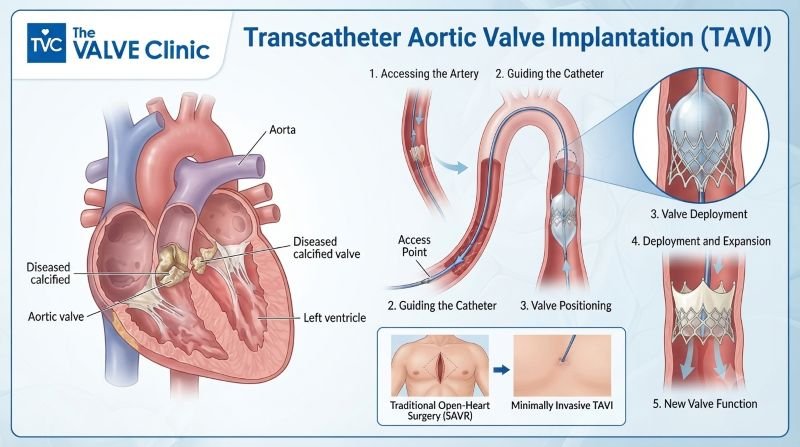
TAVI surgery (Transcatheter Aortic Valve Implantation) is a minimally invasive procedure used to replace a diseased aortic valve without opening the chest or stopping the heart in most cases.
Instead of removing the damaged valve surgically, a replacement valve is delivered through a thin catheter, usually inserted through an artery in the groin. The new valve is positioned inside the diseased valve and begins working immediately.
This approach has transformed the treatment of severe aortic stenosis, particularly for patients who may have higher risks with conventional open-heart surgery.
Who May Need TAVI Surgery?
TAVI is primarily recommended for patients diagnosed with severe aortic stenosis, a condition where the aortic valve becomes narrowed and restricts blood flow from the heart.
Common symptoms include:
- Shortness of breath
- Chest discomfort
- Fatigue during routine activities
- Dizziness or fainting
- Reduced exercise tolerance
- Heart failure symptoms in advanced cases
Not every patient with valve disease requires immediate intervention. Your cardiologist evaluates symptoms, echocardiography findings, CT imaging, and overall health before recommending treatment.
Patients who may benefit include:
- Older adults with severe symptomatic aortic stenosis
- Patients considered high or intermediate surgical risk
- Individuals with multiple medical conditions
- Selected younger patients after multidisciplinary evaluation
Treatment decisions are always individualized rather than based on age alone.
How Is the TAVI Procedure Performed?
The procedure usually follows several carefully planned steps.
Before the Procedure
Patients undergo detailed investigations, including:
- Echocardiography
- CT scan for valve measurements
- Coronary angiography if required
- Blood investigations
- Clinical assessment by the Heart Team
These tests help determine whether TAVI is technically suitable and identify the safest approach.
During the Procedure
The intervention is generally performed in a specialized catheterization laboratory or hybrid operating room.
A catheter is inserted through the femoral artery in the groin. The replacement valve is compressed inside the catheter and guided to the diseased aortic valve using advanced imaging.
Once correctly positioned, the new valve expands and begins functioning immediately.
The procedure generally takes between one and two hours, although individual cases may vary.
After the Procedure
Most patients spend a short period under close monitoring before returning to the ward.
Depending on recovery, many patients begin walking within a day.
Hospital stay is often shorter than traditional valve replacement surgery.
Benefits of TAVI Surgery in India
Modern TAVI surgery in India offers several important advantages for appropriately selected patients.
These include:
- No large chest incision
- Less postoperative discomfort
- Faster recovery
- Shorter hospital stay
- Earlier return to daily activities
- Reduced blood loss
- Suitable for many elderly patients
- Excellent improvement in symptoms and quality of life
Clinical studies have demonstrated very encouraging long-term outcomes when patients are carefully selected by experienced structural heart teams.
However, every procedure has potential risks, which should always be discussed before treatment.
TAVI Surgery Recovery Time: What Patients Can Expect
Understanding TAVI surgery recovery time helps patients prepare both physically and mentally.
In Hospital
Most patients:
- Walk within 24 hours
- Resume eating normally
- Experience significantly less discomfort than after open-heart surgery
Hospital discharge commonly occurs within two to five days depending on overall health and recovery.
First Few Weeks
Patients are encouraged to:
- Walk regularly
- Avoid heavy lifting
- Take prescribed medications
- Attend scheduled follow-up visits
Energy levels generally improve gradually over several weeks.
Long-Term Recovery
Most people return to many normal daily activities within a few weeks.
Regular follow-up with your cardiologist remains important to monitor valve function and overall heart health.
Recovery varies depending on age, other medical conditions, and physical fitness before the procedure.
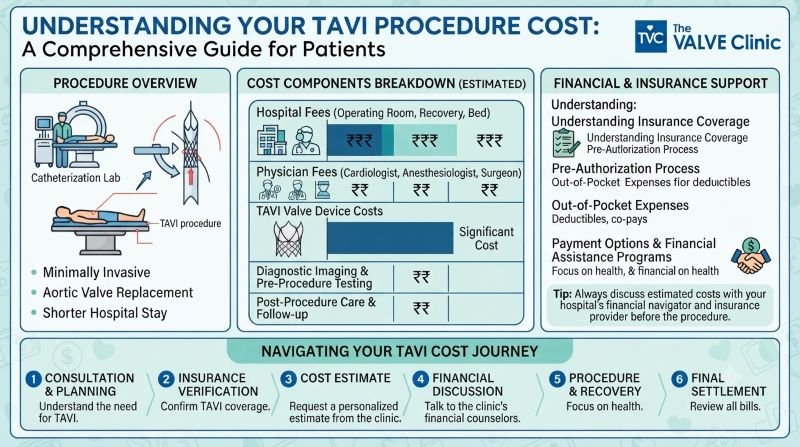
TAVI Procedure Cost in India
One of the most common questions patients ask concerns TAVI procedure cost in India.
The total cost can vary based on several factors, including:
- Type of replacement valve used
- Hospital infrastructure
- Complexity of the procedure
- Length of hospital stay
- Additional investigations
- Existing medical conditions
- Insurance coverage
Rather than comparing treatment based solely on price, patients should understand what is included in the overall care plan.
A personalized consultation provides the most accurate estimate after reviewing your clinical condition.
Are There Any Risks?
Although TAVI is considered a safe and well-established procedure, every intervention carries some risk.
Potential complications may include:
- Bleeding
- Stroke
- Irregular heart rhythm
- Vascular complications
- Need for pacemaker
- Valve leakage
- Infection
Fortunately, advances in technology, imaging, and procedural planning continue to reduce these risks significantly.
The goal is always to balance expected benefits against individual procedural risk.
Dr. Ankur Phatarpekar’s Clinical Perspective
When I evaluate someone for valve replacement, my first question is never, “Can we perform TAVI?” Instead, I ask, “What treatment will provide the safest and most durable outcome for this individual?”
Every patient is different. Age alone does not determine suitability. I carefully review imaging, valve anatomy, overall health, coronary arteries, kidney function, and long-term expectations before making recommendations.
Many patients are relieved to learn that a minimally invasive option may be available. At the same time, I believe patients deserve honest conversations about both the advantages and the limitations of every treatment.
Good outcomes come from choosing the right procedure for the right patient, not from recommending the same approach to everyone.
Frequently Asked Questions
Choosing treatment for aortic valve disease often raises practical questions. Below are answers to some of the most common queries patients ask during consultation.
Q. What is TAVI surgery?
TAVI surgery is a minimally invasive method of replacing a narrowed aortic valve using a catheter instead of conventional open-heart surgery in appropriately selected patients.
Q. How long is TAVI surgery recovery time?
Most patients experience a relatively short TAVI surgery recovery time, with walking beginning within a day and many returning to normal activities within a few weeks.
Q. What is the TAVI procedure cost in India?
The TAVI procedure cost in India depends on the type of valve, hospital, investigations, and overall medical condition. Your treatment team can provide an individualized estimate after evaluation.
Q. Is TAVI safer than open-heart surgery?
For many suitable patients, TAVI offers excellent outcomes with less invasive treatment. However, the safest option depends on individual anatomy, age, and overall health.
Q. Who is eligible for TAVI surgery in India?
Patients with severe symptomatic aortic stenosis may be candidates for TAVI surgery in India after comprehensive evaluation by a multidisciplinary Heart Team.
The Valve Clinic Helping You Make an Informed Decision
Choosing valve replacement is an important decision, and I encourage every patient at The Valve Clinic to understand all available treatment options before proceeding. If you have been advised to undergo valve replacement or would like a second opinion, a detailed clinical evaluation can help determine the most appropriate approach for your specific condition.
Phone: +91 90045-06263
Email: thevalveclinic@gmail.com
Address: 11TH FLOOR, DIAMOND PLAZA, 1101, Chabildas Rd, opp. Plaza Cinema, Dadar West, Dadar, Mumbai, Maharashtra 400028, India
Author
Dr. Ankur Phatarpekar
Structural Heart Specialist
This article has been medically reviewed to provide accurate, patient-focused information. It is intended for educational purposes and should not replace an individualized consultation or clinical evaluation.