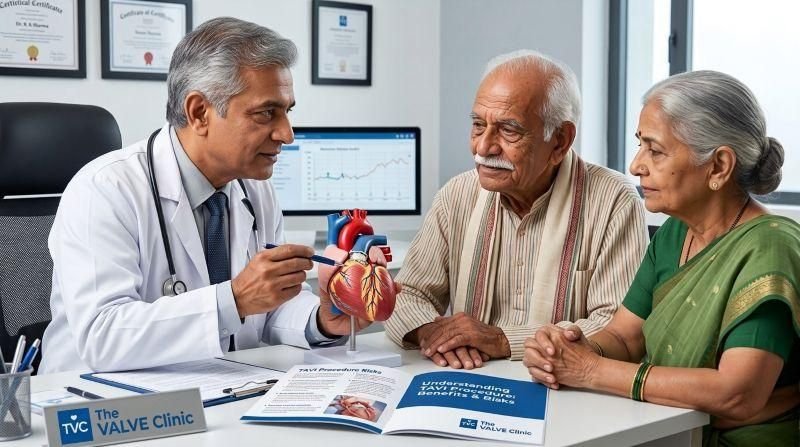
TAVI procedure risks in elderly patients depend on overall health, the severity of aortic stenosis, heart function, and individual anatomy. Although Transcatheter Aortic Valve Implantation (TAVI) can treat severe aortic stenosis without conventional open-heart surgery, complications are possible. A careful assessment helps determine whether the benefits outweigh the risks for each patient.
What Is TAVI, and Why Is It Considered for Older Patients?
TAVI, also called TAVR (Transcatheter Aortic Valve Replacement), is a minimally invasive procedure used to replace a narrowed aortic valve. The new valve is generally delivered through a catheter inserted into an artery, commonly through the groin.
In older adults, severe aortic stenosis can cause breathlessness, chest discomfort, dizziness, fainting, and reduced ability to perform everyday activities. If left untreated, severe symptomatic disease can lead to serious complications.
TAVI may be appropriate for selected elderly patients because it avoids the need for conventional open-heart valve replacement. However, it is not automatically the best option for everyone.
If your parent or family member is around 80 years old, read our guide on TAVI for 80-year-old patients to understand how age, general health, and clinical findings influence treatment decisions. You can also explore our complete guide to TAVI surgery, benefits, and recovery for more information about the procedure.
What Are the Main TAVI Procedure Risks in Elderly Patients?
Most patients undergo a structured assessment before TAVI. Nevertheless, families should understand the potential complications before making a treatment decision.
Bleeding and Blood Vessel Complications
Because TAVI commonly involves inserting a catheter through an artery, bleeding, bruising, or damage to the blood vessel can occur at the access site. The risk may be higher in patients with fragile blood vessels, peripheral artery disease, or certain medication-related factors.
The medical team evaluates the blood vessels before the procedure and monitors the access site afterwards.
Stroke
A stroke is an important potential complication of TAVI. It may occur if material dislodged during the procedure travels to the brain. Although stroke is not inevitable, its consequences can be serious.
Doctors assess the patient’s medical history and neurological risk factors and take appropriate precautions during the procedure.
Heart Rhythm Problems and Pacemaker Requirement
Some patients develop disturbances in the heart’s electrical conduction system after TAVI. In certain cases, a permanent pacemaker may be necessary.
The likelihood depends partly on the patient’s existing conduction abnormalities, valve anatomy, and procedural factors. Heart rhythm is monitored before and after valve implantation.
Kidney Injury
Contrast dye may be used during planning and the procedure. In patients with pre-existing kidney disease, dehydration, or other risk factors, kidney function may deteriorate.
The team reviews kidney function and takes appropriate measures to reduce avoidable strain on the kidneys.
Leakage Around the New Valve
Sometimes, a small gap between the implanted valve and the patient’s natural valve structure allows blood to leak around the replacement valve. This is called paravalvular leakage.
Its significance depends on the severity of the leak. Imaging and follow-up assessments help determine whether further treatment is needed.
Infection and Other Serious Complications
Infection, heart attack, valve malposition, emergency conversion to surgery, or death can occur, although these outcomes vary considerably between patients and clinical circumstances.
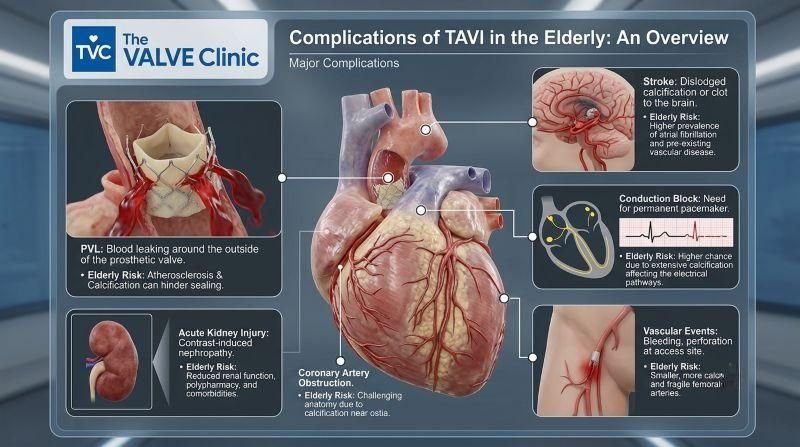
The important point is that TAVI complications in elderly patients are not the same for everyone. Individual risk should be assessed using clinical findings rather than age alone.
For a broader overview of the procedure, its benefits, complications, and recovery, read our guide to TAVI procedure benefits, risks, recovery, and success rate.
Which Factors Increase TAVI Risks in Older Adults?
Age is only one part of the decision. Other factors can influence procedural risk, recovery, and long-term benefit.
- Frailty: Reduced strength, mobility, or independence may affect recovery.
- Kidney disease: Impaired kidney function can increase the risk of complications.
- Existing heart conditions: Poor heart function, coronary artery disease, or other valve problems may complicate treatment.
- Vascular disease: Narrowed or fragile arteries can make catheter access more difficult.
- Other medical conditions: Lung disease, diabetes, anaemia, and previous strokes may influence the overall assessment.
- Anatomical considerations: Valve structure, the size of the blood vessels, and the position of the coronary arteries help determine procedural suitability.
These factors do not automatically rule out TAVI. Instead, they help the Heart Team understand the patient’s risks and identify the most appropriate treatment approach.
Is TAVI Safe for an 80-Year-Old Patient?
For appropriately selected patients, TAVI can be an effective treatment for severe aortic stenosis, including in people aged 80 and above. However, no procedure is completely risk-free.
The decision should consider whether the patient is likely to benefit in terms of symptoms, daily functioning, and quality of life. It should also account for life expectancy, other illnesses, personal preferences, and the patient’s goals of care.
Before recommending treatment, doctors may review an echocardiogram, CT scan, kidney function, blood tests, and other relevant investigations. The assessment helps establish whether TAVI, surgical valve replacement, or another approach is most suitable.
Families should also ask about the patient’s individual complication risks, expected hospital stay, rehabilitation needs, and follow-up plan. For more details about the treatment itself, visit our TAVI treatment page.
Dr. Ankur Phatarpekar Clinical Perspective
Dr. Ankur Phatarpekar emphasises the importance of assessing the whole patient rather than making a decision based on age alone. An 80-year-old who remains active and independent may have a very different risk profile from someone of the same age who is physically weak, has advanced kidney disease, or lives with several long-term health conditions.
The central question is not simply whether TAVI can be performed, but whether it is likely to provide meaningful benefit at an acceptable level of risk. This requires careful review of valve anatomy, heart function, associated illnesses, and the patient’s priorities.
A balanced discussion should explain both the potential benefits and the possible complications. It should also help families understand what recovery may involve and what outcomes are realistic for their particular situation.
How Can Families Help Reduce Risks Before and After TAVI?
Families can support safer treatment by helping the patient prepare for assessment and follow medical instructions.
- Share a complete list of medications, allergies, and existing medical conditions.
- Attend consultations and clarify any concerns about the procedure.
- Follow instructions regarding medication changes, fasting, and pre-procedure tests.
- Support gradual mobilisation and follow the discharge plan.
- Keep follow-up appointments and prescribed medications up to date.
After discharge, seek urgent medical attention for symptoms such as sudden weakness, facial drooping, difficulty speaking, severe chest pain, significant breathlessness, or uncontrolled bleeding. Fever, increasing redness at the access site, or worsening symptoms should also be reported promptly.
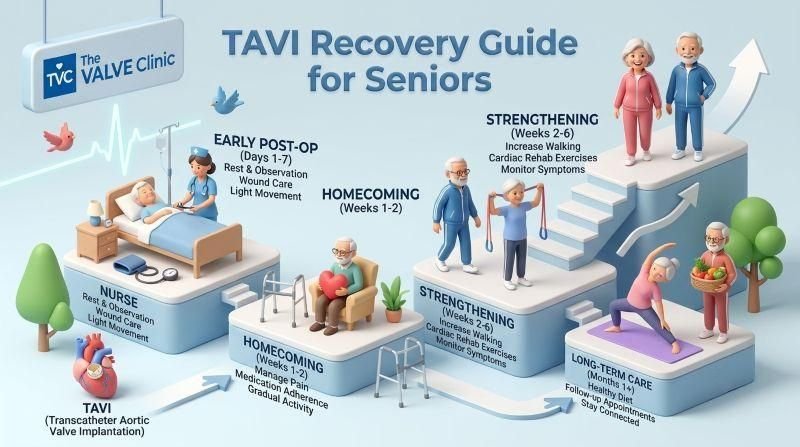
Recovery varies from person to person. Patients should follow their treating team’s advice rather than assuming that everyone can resume normal activities on the same schedule. Our guide to recovery after TAVI for senior patients explains the recovery timeline and the importance of follow-up care.
Frequently Asked Questions About TAVI Risks
Families often have practical questions about safety, complications, and recovery before deciding on treatment. Here are clear answers to common concerns.
Q. Is TAVI a high-risk procedure for elderly patients?
TAVI procedure risks in elderly patients vary according to frailty, heart function, kidney health, vascular anatomy, and other medical conditions. Many appropriately selected patients benefit from the procedure, but individual risk assessment is essential.
Q. Can an 80-year-old safely undergo TAVI?
Yes, many 80-year-old patients can undergo TAVI if the clinical assessment supports it. Age alone does not determine suitability; the patient’s overall health, valve anatomy, and expected benefit are important. Read our guide on TAVI for 80-year-old patients for more information.
Q. What are the most common complications of TAVI?
Potential complications include bleeding, blood vessel injury, stroke, heart rhythm disturbances requiring a pacemaker, kidney injury, and leakage around the new valve. The likelihood and seriousness of these complications vary between patients.
Q. How long does it take to recover after TAVI?
Some patients resume light activities within days, while others need longer depending on their health and complications. The treating team provides individual guidance on walking, wound care, medication, and follow-up. Read our TAVI recovery guide for senior patients to understand what recovery may involve.
Q. Is TAVI safer than open-heart surgery for older adults?
TAVI avoids conventional open-heart surgery, but neither treatment is universally safer for every patient. The appropriate choice depends on surgical risk, anatomy, other health conditions, expected outcomes, and the Heart Team’s assessment.
Q. What happens if TAVI complications occur?
The medical team monitors patients for complications and treats them according to their nature and severity. Some problems can be managed with medication or monitoring, while others may require a pacemaker, an additional procedure, or more intensive treatment.
Discuss TAVI Suitability With The Valve Clinic
If your parent or family member has been diagnosed with severe aortic stenosis, understanding the risks is an important step towards making an informed decision.
I encourage you to discuss the diagnosis, available treatment options, and expected benefits with a cardiac specialist. At The Valve Clinic, the aim is to help patients and families understand their options and make decisions based on individual clinical needs.
Phone: +91 90045-06263
Email: thevalveclinic@gmail.com
Address: 11th Floor, Diamond Plaza, 1101, Chabildas Rd, opposite Plaza Cinema, Dadar West, Dadar, Mumbai, Maharashtra 400028, India
A careful assessment can help clarify whether TAVI is an appropriate option and what the treatment journey may involve. The right decision should be based on the patient’s condition, medical evidence, and informed discussion with the treating team.