
TMVR — Catheter-Based Mitral Valve Replacement in Selected Patients
TMVR is a catheter-based valve replacement approach that may be considered in selected patients with mitral valve disease, including some patients with a failed previous mitral valve replacement or repair. Suitability depends on clinical and anatomical assessment.
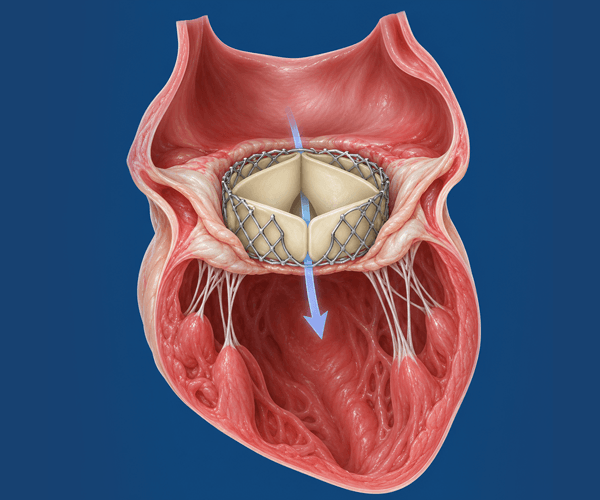
What is TMVR?
TMVR is a transcatheter procedure in which a replacement valve is implanted in the mitral position. The access route varies according to the device, anatomy and clinical situation.
Unlike TEER, which aims to reduce regurgitation by approximating mitral valve leaflets, TMVR involves implantation of a replacement valve. TMVR may be considered for certain patients with a failed mitral bioprosthesis or repair ring and for selected patients with native mitral valve disease, subject to procedure-specific eligibility and clinical evaluation
How is TMVR different from TEER?
Types of TMVR
TMVR is used in different clinical situations. The most established use is valve-in-valve replacement for failed bioprosthetic valves. Native valve TMVR is a newer, evolving area.

- Supported by published clinical studies and registry data
- May provide an alternative to repeat surgical valve replacement in suitable patients
- Suitability depends on surgical risk, valve anatomy, age and health

- May be considered after previous repair failure
- Suitability depends on ring characteristics and device
- Case-by-case anatomical assessment required.

- Considered in selected patients according to clinical indications and evidence
- Requires detailed imaging
- Evidence and applications continue to develop.
Who may be considered for TMVR?
TMVR may be considered for selected patients following detailed clinical evaluation and imaging. Echocardiography and CT can help assess anatomy, feasibility and risks.






TMVR requires detailed selection and planning, relevant cardiac specialist input, imaging review and consideration of benefits, risks and alternatives.
How TMVR is performed
TMVR is performed in a facility equipped for complex structural heart intervention. CT, echo and fluoroscopy may be used for planning and guidance.



Published Clinical Evidence on TMVR
TMVR evidence differs significantly between its applications. Valve-in-valve TMVR for failed bioprosthetics has a growing evidence base. Native valve TMVR remains an evolving field with more limited data.
Valve-in-Valve and Valve-in-Ring — key evidence points
- Published registries have evaluated valve-in-valve TMVR in failed biological valves. Findings must be interpreted according to population, procedure and endpoints.
- LVOT obstruction is a significant potential complication; frequency varies by procedure and anatom
- Valve-in-ring outcomes vary and may be less favourable than valve-in-valve in some cohorts.
Sources: VIVID Registry; published TMVR outcome data; ACC/AHA Valvular Heart Disease Guidelines. Evidence is evolving — outcomes depend heavily on patient selection, anatomy and centre experience. These figures represent registry populations, not individual expected outcomes. Every TMVR case is reviewed individually by the Heart Team before any recommendation.
Recovery and Follow-Up After TMVR
Recovery varies significantly depending on the access route used, the patient's overall health, and the clinical context. There is no fixed recovery timeline that applies to all TMVR patients.
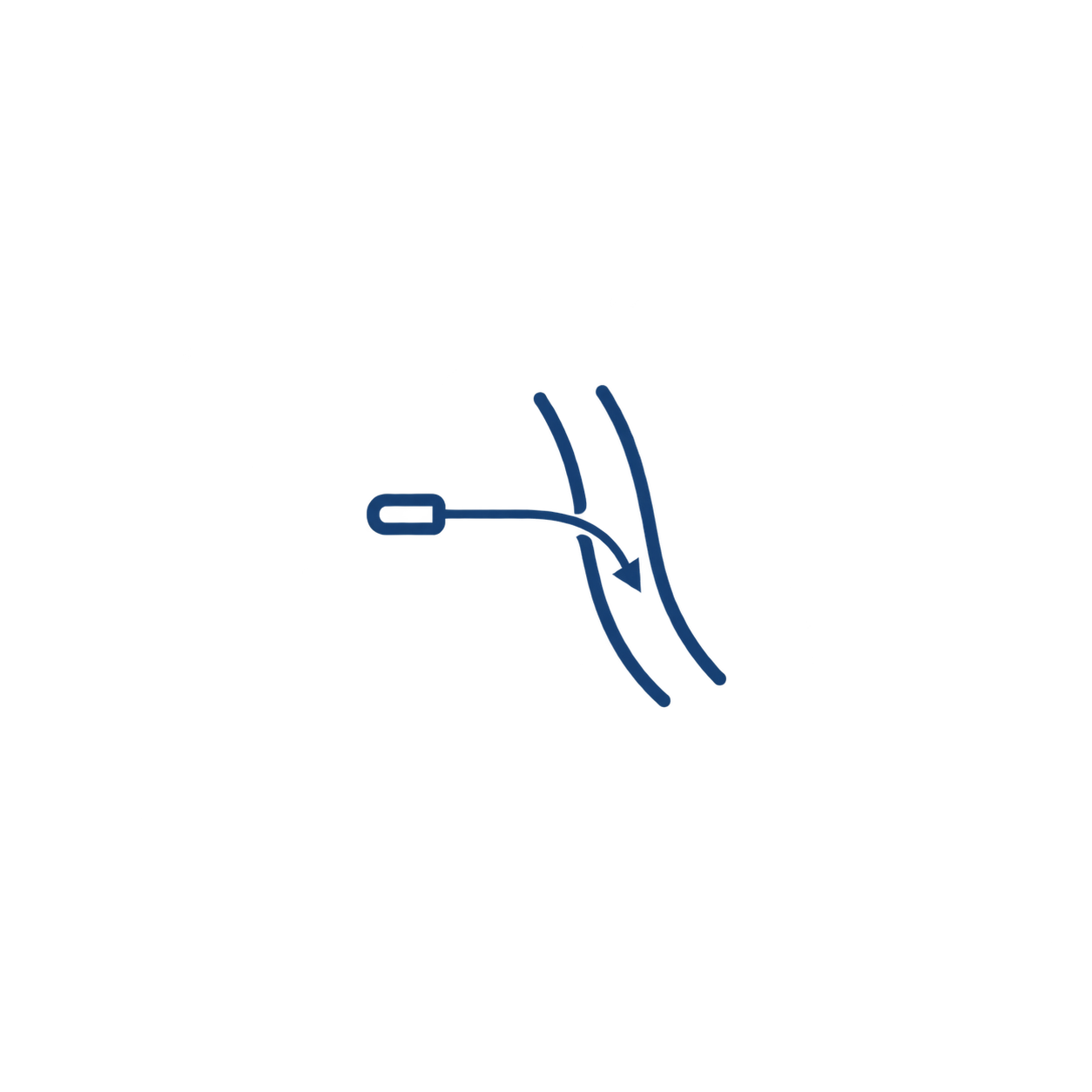
Transseptal approach (more common)
- Hospital stay depends on procedure, recovery, associated conditions and complications.
- Mobilisation is guided by clinical stability and treating-team advice.
- Recovery may differ by access route and individual circumstances.
Transapical approach (when required)
- Transapical access involves a chest incision and may require different postoperative monitoring.
- Length of stay depends on individual condition and postoperative course.
- Pain management, respiratory care and rehabilitation may be included as clinically indicated.
Follow-up after discharge
- Surveillance is arranged according to prosthetic valve, procedural result and follow-up plan.
- Antithrombotic treatment depends on valve, rhythm, bleeding risk and other factors.
- Ongoing clinical review monitors valve function, symptoms, medication and complications.

Potential Risks and Long-Term Considerations
TMVR is a complex procedure with potentially serious complications. Risks and benefits depend on anatomy, history, approach and condition. Individual counselling and informed consent are required.
Procedure-related risks
- Retain accurate risk list — a specific risk in TMVR, identified by CT pre-screening
- Applicable valve — leakage around the prosthetic valve
- Malposition/embolization
- Need for a permanent bleeding
- Cardiac thrombosis/dysfunction (fluid around the heart)
- Access site complications
- Need for conversion to open surgery
Longer-term considerations
- Valve durability — bioprosthetic valves have finite durability; a further procedure may be needed in the future
- Anticoagulation — Anticoagulation may be required for a defined or extended period depending on valve and individual circumstances
- Need for device-specific surveillance imaging
- The procedure does not address coronary artery disease or other underlying cardiac conditions
Frequently asked questions
EER aims to reduce regurgitation by bringing portions of the leaflets together, leaving the native valve in place. TMVR implants a replacement valve. TMVR may involve transseptal access or a chest incision. Indications, anatomy and risks differ.
It depends on the application. The evidence and clinical use differ by application. Valve-in-valve for failed biological valves has substantial published data; valve-in-ring has further anatomical challenges; native-valve applications continue to evolve by device, indication and anatomy.
LVOT obstruction is restriction of blood leaving the left ventricle. It can be an important TMVR complication because the implanted valve or related structures affect outflow. CT helps estimate risk and guide decisions but cannot eliminate it.
Anticoagulant or other antithrombotic medication may be required. Choice, dose and duration depend on implanted valve, heart rhythm, bleeding risk and other conditions. Do not stop prescribed treatment without medical advice.
Suitability depends on valve condition, previous procedures, anatomy, overall health and available treatments. Echo, CT and other investigations may be required. TMVR cannot be recommended solely from symptoms or a website enquiry.