
Heart failure treatment focuses on managing symptoms, improving quality of life, addressing the underlying cause and reducing the risk of hospitalisation. Depending on the type and severity of the condition, treatment may include prescribed medicines, lifestyle changes, cardiac devices or procedures to address structural problems such as heart valve disease.
Breathlessness, fatigue and swelling in the legs can occur with heart failure and other conditions. Medical assessment helps establish the cause. Our guide to heart failure diagnosis, symptoms and tests explains the investigations that doctors may consider when evaluating these symptoms.
What Is Heart Failure Treatment?
Heart failure occurs when the heart cannot pump blood effectively enough to meet the body’s needs or has difficulty filling with blood. It does not mean that the heart has stopped working. The condition can develop due to coronary artery disease, high blood pressure, heart muscle disease or problems involving the heart valves.
Heart failure treatment aims to manage symptoms, reduce complications and address the factors contributing to the condition. The treatment plan depends on the heart’s pumping function, the underlying cause, other medical conditions and the patient’s overall health.
Doctors may classify heart failure according to the left ventricular ejection fraction (LVEF), which measures the percentage of blood pumped out of the left ventricle with each contraction. This assessment helps guide treatment decisions.
What Are the Different Heart Failure Treatment Options?
Heart failure treatment options vary according to the type of heart failure and individual clinical findings. Treatment may involve medicines, lifestyle measures, cardiac devices or procedures.
Medicines for Heart Failure
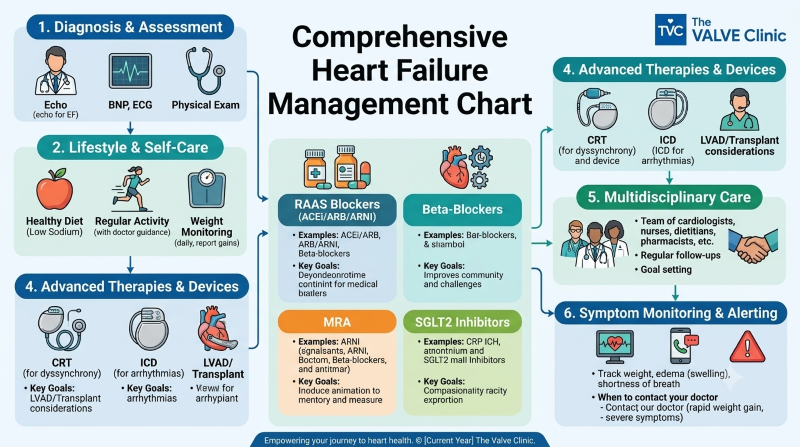
Medicines play an important role in managing heart failure. For eligible patients with heart failure with reduced ejection fraction (HFrEF), treatment commonly includes four foundational medication groups:
- Angiotensin receptor-neprilysin inhibitor (ARNI): Helps reduce strain on the heart and supports heart failure management.
- Evidence-based beta-blockers: Help regulate heart rate and reduce the heart’s workload.
- Mineralocorticoid receptor antagonists (MRAs): Help manage hormonal effects that can contribute to fluid retention and heart strain.
- Sodium-glucose cotransporter-2 (SGLT2) inhibitors: Help reduce the risk of heart failure events in eligible patients.
An ACE inhibitor or angiotensin receptor blocker (ARB) may be used when an ARNI is unsuitable. These medicines are alternatives within that part of treatment and should not routinely be combined with an ARNI. Doctors may also prescribe diuretics to relieve fluid retention and congestion.
The choice and dosage of medicines depend on individual assessment. Doctors may monitor blood pressure, kidney function and potassium levels during treatment. Patients should not start, stop or change prescribed medicines without medical advice.
Heart Failure With Preserved Ejection Fraction (HFpEF)
Heart failure can also occur when the heart’s ejection fraction remains preserved. This condition is known as heart failure with preserved ejection fraction (HFpEF). The heart may have difficulty relaxing or filling properly, even though its pumping percentage appears normal.
Treatment differs from HFrEF and may include medicines that reduce heart failure events in eligible patients, treatment of fluid retention and management of associated conditions such as high blood pressure, diabetes or kidney disease. A preserved ejection fraction does not rule out heart failure or mean that treatment is unnecessary.
Lifestyle Changes for Heart Failure
Lifestyle measures support medical treatment and help patients manage their condition. Depending on individual needs, doctors may recommend:
- Following an appropriate dietary plan and discussing salt intake with the treating team.
- Monitoring fluid intake if advised by the doctor.
- Maintaining physical activity within recommended limits.
- Monitoring body weight and reporting sudden changes.
- Avoiding smoking and limiting alcohol as advised.
- Taking prescribed medicines consistently and attending follow-up appointments.
Patients should seek individual guidance before making major changes to their diet, fluid intake or exercise routine.
Cardiac Devices and Advanced Treatment
Selected patients may need a cardiac device or advanced heart failure treatment alongside medicines. Decisions depend on factors such as heart function, electrical conduction, arrhythmia risk, symptoms and overall health.
- Implantable cardioverter-defibrillator (ICD): Helps protect eligible patients against certain dangerous heart rhythm disturbances.
- Cardiac resynchronisation therapy (CRT): Helps coordinate heart contractions in selected patients with electrical conduction problems.
- Left ventricular assist device (LVAD): Provides mechanical support to the circulation in selected patients with advanced heart failure.
- Heart transplantation: May be considered for carefully selected patients with advanced heart failure.
These treatments have different purposes and eligibility criteria. Specialist assessment helps determine whether any of them may be appropriate.
Can Heart Valve Disease Cause Heart Failure?
Yes. Certain heart valve conditions can contribute to heart failure by affecting how blood moves through the heart. When a valve becomes narrowed or does not close properly, the heart may need to work harder to maintain blood circulation.
For example, aortic stenosis narrows the aortic valve opening and can restrict blood flow from the heart. Severe disease may place additional strain on the heart. You can read more about aortic stenosis symptoms, causes, diagnosis and treatment.
Similarly, mitral regurgitation allows blood to flow backwards through the mitral valve, potentially increasing the workload on the heart.
The relationship can work in both directions. Mitral valve disease may contribute to heart failure, while changes in the heart’s size or function can also cause secondary mitral regurgitation. Identifying the mechanism helps guide treatment.
When Are Heart Valve Procedures Considered for Heart Failure?
Heart valve procedures may be considered when significant valve disease contributes to heart failure. The decision depends on symptoms, imaging findings, valve anatomy, overall health and the expected benefits and risks of intervention.
Depending on the condition and clinical assessment, options may include:
- Transcatheter aortic valve implantation (TAVI/TAVR): A catheter-based procedure that replaces a diseased aortic valve in selected patients. Read about the TAVI procedure.
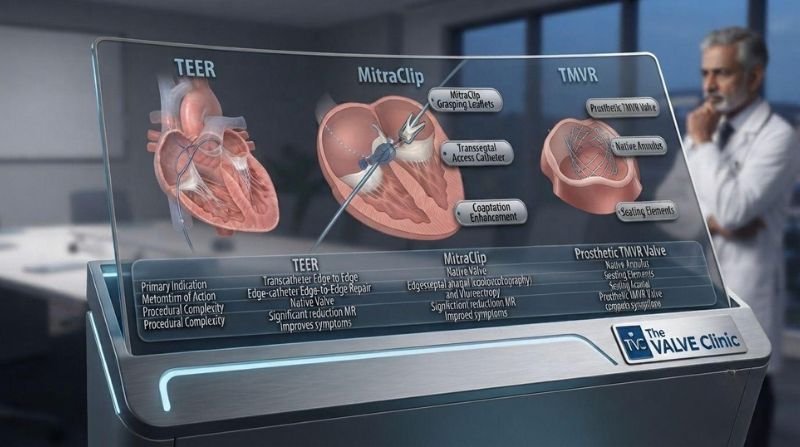
- Transcatheter edge-to-edge repair (TEER): A catheter-based mitral valve repair technique considered for selected patients with significant mitral regurgitation after specialist assessment. MitraClip is one device used for TEER. Read about the MitraClip procedure.
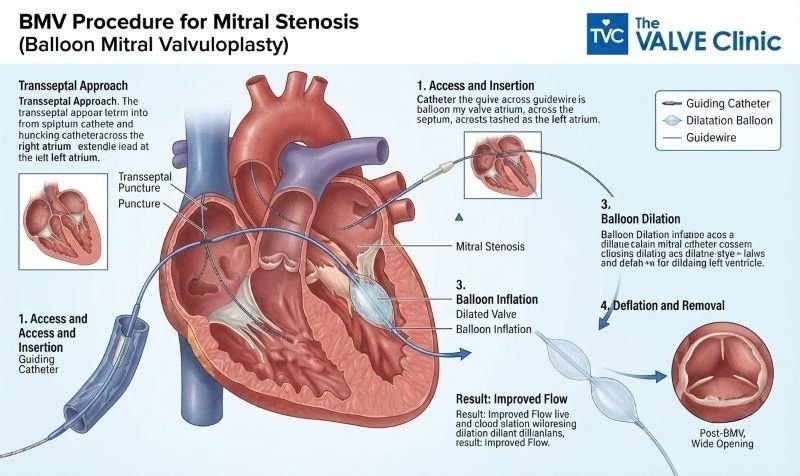
- Balloon mitral valvotomy: May be considered for selected patients with clinically significant rheumatic mitral stenosis and suitable valve anatomy, after assessment for contraindications.
- Surgical valve repair or replacement: May be considered when the type and severity of valve disease, patient characteristics and expected outcomes support surgery.
For secondary mitral regurgitation associated with heart failure, the medical team assesses and optimizes heart failure treatment, including other indicated therapies, before deciding whether a valve intervention is appropriate. Valve procedures do not treat every form of heart failure.

How Do Doctors Decide the Right Heart Failure Treatment?
Doctors consider several factors before recommending a treatment plan. These may include the patient’s symptoms, medical history, physical examination, echocardiogram findings, ejection fraction, heart rhythm, kidney function and the presence of other conditions.
The evaluation may also identify whether heart failure is associated with coronary artery disease, high blood pressure, heart muscle disease or a valve problem. The treating team considers the potential benefits, risks and alternatives of available treatments.
A single test result does not determine the entire treatment plan. Decisions should reflect the patient’s clinical condition and individual needs.
Why the Cause of Heart Failure Matters
Heart failure management includes identifying the underlying cause and managing symptoms. In people with reduced pumping function, appropriate medical therapy is important. When significant valve disease is also present, assessment should establish whether it contributes to heart failure or results from changes in the heart.
A person with severe aortic stenosis and heart failure may require assessment for aortic valve intervention. Selected patients with significant mitral regurgitation may also be assessed for intervention, taking account of the mechanism and appropriate medical treatment.
Decisions should consider symptoms, imaging, valve anatomy, overall health, alternatives and procedural risks. A treatment plan should be individualised rather than based on a single test result.
Why Regular Follow-Up Matters During Heart Failure Treatment
Regular follow-up helps doctors assess symptoms, review treatment response and identify changes in the patient’s condition. During appointments, the treating team may review blood pressure, heart rate, kidney function, medication tolerance and relevant imaging findings.
Patients should report new or worsening symptoms, sudden weight changes or difficulties taking prescribed medicines. Severe or sudden breathlessness, chest pain, fainting or rapidly worsening symptoms require urgent medical attention.
Follow-up appointments also give patients an opportunity to discuss concerns about their medicines, activity levels and ongoing care.
Frequently Asked Questions About Heart Failure Treatment
Understanding treatment options can help patients prepare for discussions with their treating clinician. The following answers address common questions about medicines, procedures and ongoing care.
Q. Can heart failure be treated without surgery?
Yes. Many patients receive treatment through prescribed medicines, lifestyle measures and regular monitoring. Surgery or catheter-based procedures may be considered when an underlying structural problem, such as significant heart valve disease, requires intervention. The treatment plan depends on the cause and severity of the condition.
Q. What is the most effective medicine for heart failure?
There is no single medicine suitable for everyone. Eligible patients with HFrEF commonly receive an ARNI, an evidence-based beta-blocker, an MRA and an SGLT2 inhibitor. An ACE inhibitor or ARB may be used when an ARNI is unsuitable. Treatment for other forms of heart failure differs. Your clinician selects and monitors treatment according to your condition.
Q. Can heart function improve with treatment?
Heart function may improve in some patients with appropriate treatment, depending on the underlying cause and the response to therapy. However, improvement varies between individuals and cannot be guaranteed. Patients should continue prescribed treatment and attend follow-up appointments as advised.
Q. Can heart valve disease cause heart failure?
Yes. Conditions such as aortic stenosis and mitral regurgitation can affect the heart’s workload and function. Heart failure can also contribute to secondary mitral regurgitation. Treatment depends on the mechanism and severity. Medicines, monitoring, surgery or catheter procedures may be considered after assessment.
Q. Does every patient with heart failure need a heart transplant?
No. Heart transplantation is considered only for carefully selected patients with advanced heart failure. Many patients receive treatment through medicines, lifestyle measures, devices or procedures addressing an underlying condition. Specialist evaluation helps determine whether advanced treatment is appropriate.
Q. How often should patients attend follow-up appointments?
The frequency depends on the patient’s condition, symptoms, treatment changes and response to medicines. Doctors may recommend more frequent reviews when starting or adjusting treatment. Patients should follow their clinician’s schedule and seek medical advice if their symptoms worsen between appointments.
Understanding Your Heart Failure Treatment Plan
Heart failure treatment depends on its type, underlying cause and effect on daily life. Medicines, lifestyle measures, devices and procedures have different roles. A valve procedure may form part of treatment when significant valve disease contributes to the condition.
Discuss your diagnosis, expected benefits, risks, alternatives and follow-up plan with your treating clinician. Continue prescribed treatment and seek urgent medical attention for severe or sudden breathlessness, chest pain, fainting or rapidly worsening symptoms.
The Valve Clinic – Contact Information
Phone: +91 90045 06263
Email: thevalveclinic@gmail.com
Address: 11th Floor, Diamond Plaza, Chhabildas Road, Dadar West, Mumbai 400028, Maharashtra, India
The information in this article is intended for general educational purposes. It does not replace medical consultation, diagnosis or individualised treatment advice. Treatment decisions should be made with a qualified healthcare professional after appropriate clinical assessment.