Patients suffering from severe mitral valve disease often experience breathlessness, fatigue, and reduced quality of life. For individuals who are considered too high-risk for open-heart surgery, the mitral valve clip procedure has emerged as a safer and highly effective minimally invasive treatment option. Cardiologists across the world now recommend this advanced structural heart therapy because it helps reduce complications, improves heart function, and offers faster recovery for elderly and medically fragile patients.
Understanding Mitral Regurgitation Symptoms
The mitral valve regulates blood flow between the left chambers of the heart. When the valve does not close properly, blood leaks backward, a condition known as mitral regurgitation or a leaking heart valve. Over time, this can weaken the heart and lead to serious complications such as heart failure if left untreated.
Common mitral regurgitation symptoms include:
- Shortness of breath during activity or rest
- Persistent fatigue and weakness
- Swelling in the legs and ankles
- Rapid or irregular heartbeat
- Chest discomfort
- Reduced exercise tolerance
- Night-time coughing or breathing difficulty
Many patients ignore early mitral regurgitation symptoms, assuming they are age-related or temporary. However, timely diagnosis and treatment are essential to prevent long-term heart damage.
Warning Signs of Severe Mitral Regurgitation Symptoms
Some symptoms may indicate worsening valve disease and require immediate medical evaluation.
Symptoms You Should Not Ignore
- Severe breathlessness while walking or lying down
- Frequent fatigue affecting daily activities
- Sudden swelling in the lower body
- Dizziness or fainting episodes
- Irregular heartbeat or palpitations
If these symptoms continue or worsen, consulting a heart valve specialist becomes extremely important.
What Is the Mitral Valve Clip Procedure?
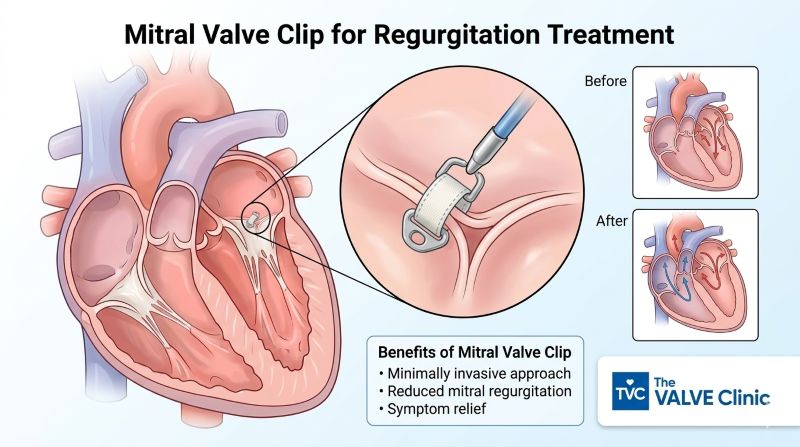
The mitral valve clip procedure is a minimally invasive treatment designed to repair a leaking mitral valve without performing open-heart surgery. During the procedure, doctors use a catheter-based approach to place a small clip on the damaged valve leaflets, helping them close more effectively and reduce blood leakage.
This advanced structural heart intervention is especially beneficial for:
- Elderly cardiac patients
- Patients with weak heart function
- Individuals with kidney disease, diabetes, or lung disease
- Patients considered unsuitable for conventional surgery
The procedure is FDA-approved and widely recognized as an effective alternative for high-risk individuals requiring mitral valve repair.
How the MitraClip Procedure Works
The mitraClip procedure is performed inside a specialized cardiac catheterization laboratory under advanced imaging guidance. Instead of opening the chest, a thin catheter is inserted through a blood vessel in the groin and guided toward the heart.
Once positioned correctly, the clip is attached to the mitral valve to reduce leakage and improve blood flow.
Key Advantages of the MitraClip Procedure
- Minimally invasive treatment
- No large surgical incision
- Reduced anesthesia-related risks
- Faster patient recovery
- Lower risk of complications
- Improved breathing and energy levels
The mitraClip procedure has become one of the most preferred minimally invasive mitral valve repair options for patients who cannot tolerate traditional surgery.
Benefits of Mitral Valve Clip Procedure for High-Risk Patients
Cardiologists often recommend the mitral valve clip procedure because it offers excellent clinical outcomes with lower procedural risks.
| Feature | MitraClip Procedure | Open-Heart Surgery |
| Invasive Level | Minimally invasive | Highly invasive |
| Recovery Time | Faster | Longer |
| Hospital Stay | Shorter | Longer |
| Risk for Elderly Patients | Lower | Higher |
| Blood Loss | Minimal | More significant |
| Suitable for High-Risk Patients | Yes | Limited |
Major Benefits Include
- Improved heart function
- Better quality of life
- Reduced hospital admissions
- Faster return to daily activities
- Lower surgical complications
- Better symptom management
For many medically fragile individuals, this procedure provides a safer path toward long-term heart health.
Who Needs a Mitral Valve Clip Procedure?
The mitral valve clip procedure may be recommended for patients who:
- Have severe mitral regurgitation
- Experience worsening mitral regurgitation symptoms
- Are at high surgical risk
- Have heart failure related to valve leakage
- Are elderly or physically weak
- Have multiple medical conditions
A complete cardiac evaluation including echocardiography and imaging tests helps determine whether a patient is suitable for this treatment.
Recovery After MitraClip Procedure
Recovery after the mitraClip procedure is generally much smoother compared to open-heart surgery because the treatment is minimally invasive.
Key Recovery Benefits
- Walking within 24 hours in many cases
- Short hospital stay
- Less pain and discomfort
- Faster return to routine activities
- Lower risk of prolonged recovery complications
Most patients notice gradual improvement in breathing, stamina, and overall energy levels within a few weeks after the procedure.

Finding the Right MitraClip Specialist Near Me
Choosing an experienced mitraClip specialist near me is extremely important for treatment success and patient safety. Since this procedure requires advanced imaging and precision-based catheter techniques, expertise plays a major role in achieving the best outcomes.
An experienced mitraClip specialist near me service can provide:
- Accurate diagnosis and evaluation
- Personalized treatment planning
- Advanced minimally invasive expertise
- Comprehensive follow-up care
- Better complication management
Patients should look for specialized heart valve centers with experienced structural heart teams and modern cardiac imaging facilities.
Why Early Treatment Matters
Delaying treatment for severe mitral regurgitation can gradually weaken the heart and increase the risk of heart failure. Early intervention with advanced minimally invasive therapies can help improve long-term outcomes and reduce complications.
Many patients experience dramatic improvement in:
- Breathing capacity
- Physical activity levels
- Daily comfort
- Overall heart performance
Timely care can significantly improve both quality of life and long-term cardiac health.
FAQs About MitraClip Procedure
Patients and families often have several questions before choosing a minimally invasive heart valve treatment. Understanding the procedure, recovery process, risks, and long-term benefits can help patients make informed decisions with confidence.
❓ What is the success rate of the mitraClip procedure?
✅ The mitraClip procedure has demonstrated excellent success rates in reducing severe mitral valve leakage, especially in high-risk patients who are not suitable for open-heart surgery. Many patients experience significant improvement in breathing, energy levels, and quality of life after treatment. Clinical studies have also shown that the procedure can reduce repeated hospital admissions related to heart failure.
❓ How long does recovery take after a mitral valve clip procedure?
✅ Recovery after a mitral valve clip procedure is generally faster than traditional heart surgery because it is minimally invasive. Most patients begin walking within a day and are discharged from the hospital within a few days depending on their overall health condition. Patients usually continue experiencing improvement in stamina and breathing over the following weeks.
❓ What are the common mitral regurgitation symptoms before treatment?
✅ Common mitral regurgitation symptoms include shortness of breath, fatigue, swelling in the legs, irregular heartbeat, and difficulty performing physical activities. In severe cases, patients may also experience chest discomfort and worsening weakness during daily activities. Early diagnosis and timely treatment can help prevent serious heart complications.
❓ How do I find the best mitraClip specialist near me?
✅ When searching for a mitraClip specialist near me, patients should choose experienced cardiologists and specialized heart valve centers with expertise in structural heart interventions. A center with advanced imaging technology, experienced cardiac teams, and personalized follow-up care can significantly improve treatment safety and outcomes. Reviewing patient experience and specialist expertise is also important before making a decision.
The Valve Clinic – Advanced Heart Valve Care
At The Valve Clinic, we provide advanced minimally invasive heart valve treatments with a focus on patient safety, personalized care, and faster recovery for high-risk cardiac patients.
📍 Address: 11th Floor, Diamond Plaza, Chhabildas Road, Dadar West, Mumbai – 400028, Maharashtra, India
📞 Tel: +91 9004506263
✉️ Email: thevalveclinic@gmail.com
Book your consultation today at The Valve Clinic and take the next step toward better heart health with expert care you can trust.