
Living with heart failure involves more than taking prescribed medication. It requires understanding your symptoms, following an appropriate diet, maintaining suitable physical activity and attending regular cardiac follow-ups. With an individualised care plan and consistent monitoring, many people can manage their condition and continue with their everyday activities. The approach depends on the type of heart failure, its underlying cause and the patient’s overall health.
What Does Living With Heart Failure Mean?
Heart failure occurs when the heart cannot pump blood effectively enough or has difficulty filling with blood to meet the body’s requirements. It does not mean that the heart has stopped working. However, it can affect how comfortably you perform everyday activities.
You may experience breathlessness while walking, tiredness during routine tasks, swelling in your ankles or difficulty sleeping comfortably when lying flat. These symptoms can change over time, depending on your heart function, fluid balance and response to treatment.
If you have recently received a diagnosis, understanding your condition is an important first step. Our previous guide on heart failure diagnosis, symptoms and tests explains how doctors assess heart function and identify possible underlying causes.
Your daily routine should support the treatment plan recommended by your cardiologist rather than follow general advice that may not suit your condition.
Daily Care for Heart Failure Patients: What Should You Monitor?
Consistent self-monitoring helps you and your treating doctor recognise changes before they become more difficult to manage.
Monitor Your Weight and Symptoms
A sudden increase in body weight over a few days may indicate fluid retention rather than an increase in body fat. Your doctor may recommend weighing yourself daily, preferably at the same time and under similar conditions.
Pay attention to changes such as:
- Increasing swelling in your feet, ankles or legs.
- Breathlessness during activities that previously felt comfortable.
- Difficulty breathing when lying down.
- Unusual tiredness or reduced exercise capacity.
- Persistent coughing or abdominal swelling.
Track your weight and symptoms. Contact your care team promptly about new or worsening symptoms, or weight gain above the threshold they give you.
Follow Your Prescribed Medication Schedule
Medicines form an important part of heart failure care. Depending on your diagnosis, your cardiologist may prescribe medicines to improve heart function, reduce fluid accumulation, control blood pressure or manage associated conditions.
Take your medicines according to the prescribed schedule. Do not stop, reduce or increase a dose because you feel better or notice a side effect. Discuss any concerns with your treating doctor.
You can also maintain a written medication list, including doses and timings. This becomes particularly useful when consulting different healthcare professionals.
Attend Regular Cardiac Follow-Up Appointments
Regular reviews allow your cardiologist to assess symptoms, blood pressure, heart rate, kidney function and response to medication. Depending on your condition, repeat blood tests or imaging may also be required.
The frequency of these appointments depends on your clinical condition and treatment changes. Do not wait until your next scheduled visit if you notice significant deterioration.
Diet for Heart Failure Patients: What Should You Consider?
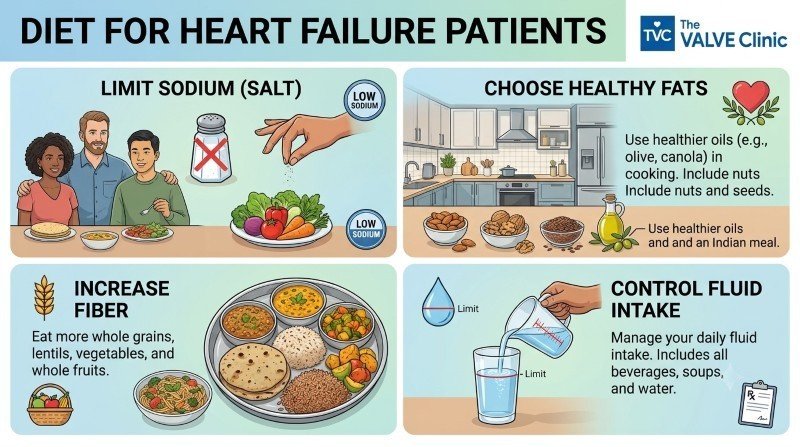
Your diet can influence fluid balance, blood pressure and overall cardiovascular health. However, dietary recommendations should reflect your individual medical condition.
Consider the following measures:
- Watch your salt intake: Excess sodium can contribute to fluid retention in some patients. Limit high-salt packaged foods, pickles, papads and heavily salted snacks when advised.
- Choose balanced meals: Include suitable portions of vegetables, fruits, whole grains and protein sources according to your nutritional requirements.
- Understand fluid restrictions: Some patients need to monitor their daily fluid intake, while others may not require a restriction. Follow your doctor’s instructions.
- Avoid unverified dietary supplements: Check with your healthcare professional before taking herbal products, supplements or electrolyte preparations.
If you have diabetes or kidney disease alongside heart failure, your dietary requirements may differ. A personalised plan is more appropriate than following a restrictive diet without medical guidance.
Is Exercise Safe for People Living With Heart Failure?
Physical activity can form an important part of long-term heart failure care. However, the type and intensity of exercise should depend on your symptoms, heart function and overall fitness.
Your cardiologist may recommend activities such as:
- Walking at a comfortable pace.
- Gentle mobility exercises.
- Gradually increasing activity within recommended limits.
- Supervised cardiac rehabilitation, where appropriate.
Build up activity gradually with your care team’s guidance. Stop if you feel unusually breathless, dizzy or have palpitations. Seek emergency help for chest pain, severe breathlessness or fainting.
The aim is to maintain suitable physical activity without placing unnecessary strain on your cardiovascular system.
Heart Failure Precautions: What Should Patients Avoid?
A few everyday precautions can help reduce avoidable complications and support your prescribed treatment.
Patients should:
- Avoid smoking and exposure to tobacco.
- Discuss alcohol consumption with their cardiologist.
- Avoid missing prescribed medication.
- Check before taking over-the-counter painkillers or herbal supplements.
- Avoid sudden changes in salt intake, fluid consumption or exercise routines.
- Report new or worsening symptoms instead of ignoring them.
Certain medicines, including some anti-inflammatory painkillers, can worsen fluid retention or affect kidney function in susceptible patients. Always check before starting a new medicine.
When Should Heart Failure Patients Seek Medical Attention?
Recognising changes in your condition is an important part of heart failure management.
Contact your treating doctor promptly if you notice increasing breathlessness, new swelling, unexpected weight gain, worsening fatigue or difficulty breathing while lying down.
Call 112 in India for emergency help if you have severe breathlessness at rest, chest pain, fainting or sudden severe deterioration.
Do not attempt to manage severe symptoms by changing your medication independently.
Why Is Long-Term Monitoring Important?
Heart failure can change over time, even when symptoms appear stable. Regular assessment helps doctors understand whether the current care plan remains appropriate.
Depending on your condition, monitoring may include:
- Blood pressure and heart rate assessment.
- Kidney function and electrolyte tests.
- Review of medication response and side effects.
- Assessment of symptoms and physical activity.
- Repeat echocardiography when clinically indicated.
An echocardiogram can help assess pumping function, chamber size and heart valve function. It may also identify changes that require further investigation.
This is particularly relevant when heart valve disease contributes to heart failure. Conditions such as aortic stenosis or mitral regurgitation can increase the workload on the heart and influence the overall management plan.
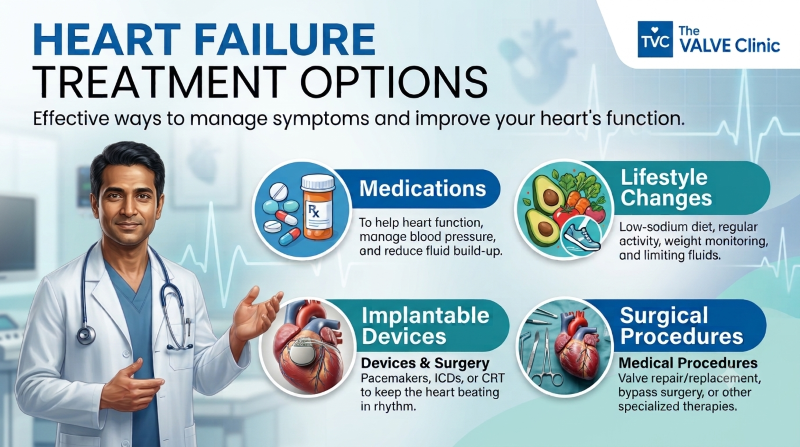
If an underlying valve condition is identified, your cardiologist may consider the appropriate medical or procedural options. You can read more about heart failure treatment options and how treatment decisions depend on individual clinical findings.
How Doctors Assess Heart Failure?
At The Valve Clinic, Doctors assess the cause of heart failure, symptoms and heart function. They also consider whether heart valve disease contributes to the condition.
Assessment may involve reviewing previous echocardiograms, understanding changes in symptoms and determining whether additional cardiac investigations are necessary.
TAVI may be considered for selected patients with severe aortic stenosis. TEER may be considered for selected patients with significant mitral regurgitation. The heart team weighs the valve anatomy, symptoms, other health conditions, benefits and risks.
Treatment decisions depend on the cause of heart failure and the person’s overall health.

Why Regular Monitoring Matters?
Regular reviews help the care team assess changes in fluid balance or heart function, even when symptoms seem stable.
Follow-up includes reviewing medicines, symptoms and the cause of heart failure. Echocardiogram findings can help assess whether valve disease is contributing.
Another important consideration is that heart failure does not present identically in every patient. Someone with reduced ejection fraction may require a different management approach from someone with preserved ejection fraction.
Lifestyle advice and treatment should reflect the type of heart failure, symptoms and other health conditions.
Frequently Asked Questions About Living With Heart Failure
Understanding everyday precautions can help patients make informed decisions and have more useful discussions with their cardiologist. Here are answers to common questions about daily routines and long-term care.
Q. Can a person live a normal life with heart failure?
Many people with heart failure continue their usual activities with appropriate medical care and lifestyle adjustments. The level of activity depends on the severity of the condition, symptoms and response to treatment. Regular monitoring remains important.
Q. What foods should heart failure patients avoid?
Patients may need to limit high-sodium foods such as packaged snacks, processed foods, pickles and heavily salted meals. However, dietary restrictions should be based on individual requirements. Your doctor or dietitian can explain a suitable heart failure management plan.
Q. Is walking good for people with heart failure?
Walking may be appropriate for many patients when recommended by their treating doctor. The duration and intensity should reflect their physical capacity and clinical condition. Patients with unstable symptoms should undergo medical assessment before exercising.
Q. How often should heart failure patients undergo an echocardiogram?
There is no fixed schedule for every patient. Your cardiologist may recommend repeat imaging when symptoms change, heart function needs reassessment or treatment decisions depend on updated findings. Learn more about an echocardiogram for heart failure.
Q. Can heart failure symptoms worsen suddenly?
Yes. Fluid buildup, abnormal heart rhythms or infections can worsen symptoms. Call 112 in India for severe breathlessness, chest pain, fainting or sudden severe deterioration.
Q. Can people with heart failure travel?
Many patients can travel after discussing their plans with their cardiologist. Medical stability, travel duration, access to medication and the availability of medical care at the destination should be considered. Patients with worsening or unstable symptoms should seek medical advice before travelling.
Preparing for Your Heart Failure Review
Managing heart failure requires an understanding of your condition, consistent follow-up and a care plan that reflects your individual needs.
Discuss persistent breathlessness, swelling, reduced activity or changes in your echocardiogram with your treating cardiologist. Bring your previous reports and medication list. Contact your care team promptly if symptoms worsen.
Dr. Ankur Phatarpekar
The Valve Clinic
Phone: +91 90045-06263
Email: thevalveclinic@gmail.com
Address: 11th Floor, Diamond Plaza, Chhabildas Road, Dadar West, Mumbai – 400028, Maharashtra, India
Medical disclaimer: This article is intended for general educational purposes. It does not replace medical consultation, diagnosis or individualised treatment advice. Always follow the recommendations of your treating healthcare professional.