
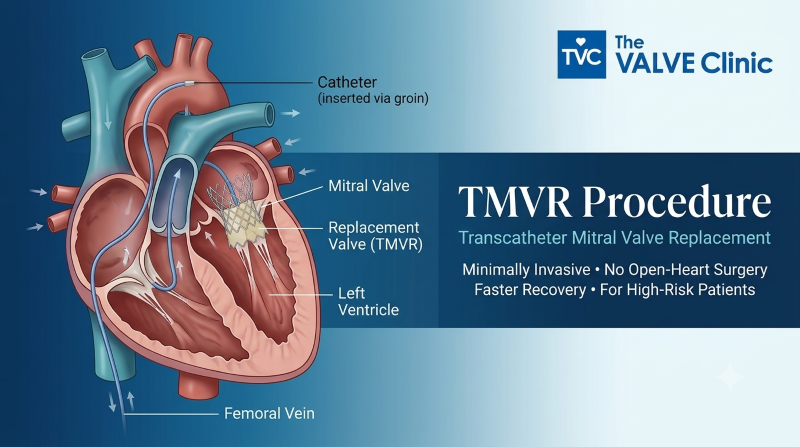
The TMVR procedure (Transcatheter Mitral Valve Replacement) is a catheter-based treatment used in selected patients with mitral valve disease. It involves implanting a replacement valve without conventional open-heart valve replacement surgery. Whether this approach is appropriate depends on the patient’s valve anatomy, medical history, surgical risk and detailed assessment by a multidisciplinary cardiac team.
What Is the TMVR Procedure?
The mitral valve controls blood flow between the left atrium and left ventricle. When this valve becomes narrowed or fails to close properly, it can affect the heart’s ability to pump blood efficiently.
Transcatheter mitral valve replacement involves placing a prosthetic valve in the mitral position using a specialised catheter delivery system. Unlike conventional surgery, which involves surgical access to the heart, this approach uses a catheter-based technique. Depending on the patient’s anatomy and the device being used, access may be through a blood vessel or through the heart’s apex.
TMVR may be considered in selected patients with a failed biological mitral valve, a previous mitral valve repair or certain complex native valve conditions.
You can read more about the TMVR treatment approach to understand its clinical applications and patient selection considerations.
Who May Need a TMVR Procedure?
Not every patient with mitral valve disease requires valve replacement. The decision depends on the severity of the condition, symptoms, valve structure and available treatment options.
Patients who may be evaluated include:
- Failed bioprosthetic mitral valves: People whose previously implanted biological replacement valve has deteriorated may be considered for valve-in-valve treatment.
- Previous mitral valve repair: Selected patients with recurrent valve dysfunction after surgical repair may be assessed for valve-in-ring treatment.
- Complex mitral valve disease: Certain patients with complicated valve anatomy may require evaluation for transcatheter replacement.
- Increased surgical risk: Patients with significant medical conditions or a higher predicted risk from repeat surgery may be assessed for catheter-based alternatives.
Age alone does not determine eligibility. A detailed clinical and anatomical evaluation is necessary before recommending treatment.
For a broader understanding of the condition, read about mitral valve regurgitation and its treatment options.
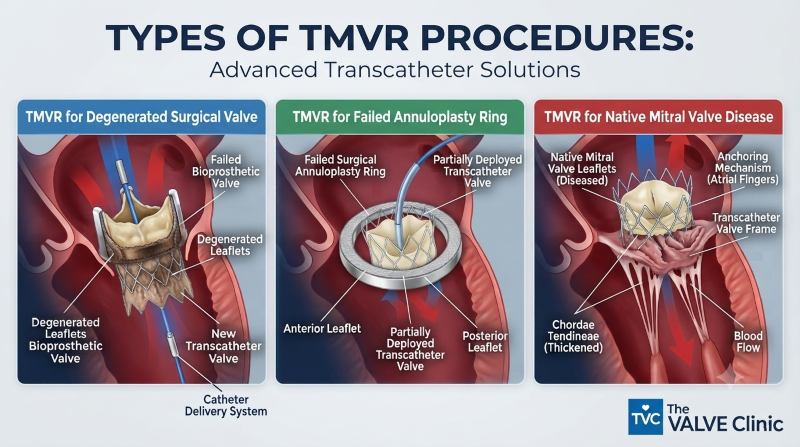
Types of TMVR Procedures
The treatment approach depends on whether the patient has a previously implanted valve, a surgical repair ring or a native mitral valve.
1. Valve-in-Valve TMVR
This approach places a new transcatheter valve inside a previously implanted biological mitral valve that is no longer functioning adequately. It may be considered in selected patients when repeat surgery needs careful evaluation.
2. Valve-in-Ring TMVR
This involves placing a replacement valve within a previously implanted surgical annuloplasty ring. Suitability depends on the ring’s shape, size and compatibility with the replacement device.
3. Native Valve TMVR
This approach involves replacing the patient’s original mitral valve without a previous surgical replacement valve. It is a developing area of structural heart intervention, and availability and eligibility depend on the specific device, clinical indication and applicable regulatory considerations.
How Is the TMVR Procedure Performed?
The procedure requires detailed preparation, specialised equipment and continuous imaging guidance. The exact technique varies according to the patient’s anatomy and the selected device.
Step 1: Pre-procedure Evaluation
The cardiology team reviews the patient’s medical history, symptoms and previous cardiac procedures. Echocardiography and cardiac CT help assess valve anatomy, measurements and potential procedural risks.
Step 2: Anaesthesia and Preparation
The patient receives anaesthesia or sedation according to the procedural plan. Monitoring equipment is used to assess heart rhythm, blood pressure and other vital parameters.
Step 3: Catheter Access
A catheter is introduced through the planned access route. This may involve a transseptal approach through a blood vessel in the groin or a transapical approach through a small surgical access in the chest.
Step 4: Replacement Valve Positioning
Using imaging guidance, the specialist advances the delivery system towards the mitral valve and positions the replacement valve carefully.
Step 5: Valve Deployment
The replacement valve is deployed at the planned location. Imaging helps the team assess its position, movement and interaction with surrounding cardiac structures.
Step 6: Post-deployment Assessment
Echocardiography and other monitoring methods are used to evaluate valve function, blood flow and possible leakage or obstruction before completing the procedure.
What Are the Benefits of TMVR?
For appropriately selected patients, this treatment may offer several potential advantages:
- Catheter-based treatment: It may avoid conventional open-heart valve replacement in suitable cases.
- Alternative after previous surgery: Valve-in-valve treatment may provide an option for selected patients with a deteriorated biological valve.
- Potential symptom improvement: Better valve function may help reduce symptoms associated with valve dysfunction.
- Individualised treatment planning: The approach allows specialists to consider alternatives for patients whose anatomy or medical condition makes conventional treatment more complex.
These benefits are not guaranteed. The expected outcome depends on the underlying valve condition, procedural risks and overall health of the patient.
What Are the Risks and Complications of TMVR?
Like other complex cardiac interventions, this treatment has potential risks. The treating cardiologist should discuss these points with the patient before obtaining informed consent.
Possible complications include:
- Bleeding or blood vessel injury at the catheter access site.
- Stroke or blood clot formation.
- Leakage around the implanted replacement valve.
- Left ventricular outflow tract (LVOT) obstruction, which can interfere with blood leaving the heart.
- Incorrect valve positioning or displacement.
- Heart rhythm disturbances.
- Infection or other procedural complications.
- Need for further intervention or, in certain circumstances, emergency surgery.
The likelihood and seriousness of these complications vary between patients. Pre-procedure CT and echocardiography help identify important anatomical risks, although they cannot eliminate every complication.

Recovery After the TMVR Procedure
Recovery depends on the access route, the patient’s overall health and whether any complications occur. There is no single recovery timeline that applies to everyone.
After the intervention, the medical team monitors the patient for changes in heart rhythm, blood pressure, bleeding and valve function. The treating team determines when mobilisation and discharge are appropriate.
After returning home, patients may need to:
- Take prescribed medicines as directed.
- Follow an individualised activity and recovery plan.
- Attend scheduled cardiology appointments.
- Undergo follow-up echocardiography to assess valve function.
- Report new or worsening breathlessness, chest discomfort, fainting or other concerning symptoms promptly.
Doctors may prescribe anticoagulant or other antithrombotic medication based on the implanted valve, heart rhythm and individual bleeding risk. Patients should not change or stop these medicines without medical advice.
TMVR vs Surgical Mitral Valve Replacement: What Is the Difference?
Both approaches aim to address significant mitral valve dysfunction, but they differ in how surgeons implant the replacement valve.
| Comparison | TMVR | Surgical replacement |
| Approach | Catheter-based | Open surgical approach |
| Access | Transseptal or transapical, depending on the case | Surgical access to the heart |
| Anaesthesia | Based on procedural requirements | Usually general anaesthesia |
| Suitability | Depends on anatomy and device-specific criteria | Depends on surgical assessment |
| Recovery | Varies with access route and health | Varies with surgery and patient health |
Neither approach is automatically better for every patient. Treatment decisions should consider surgical risk, valve anatomy, long-term expectations and available alternatives.
Dr. Ankur Phatarpekar Clinical Perspective
Dr. Ankur Phatarpekar emphasises that mitral valve treatment should begin with an accurate understanding of the patient’s condition rather than selecting a procedure based on symptoms alone. In his clinical approach, echocardiography, cardiac CT, previous surgical history and overall cardiac function are important parts of treatment planning.
He considers multidisciplinary Heart Team discussion particularly important in complex cases. The team evaluates whether transcatheter replacement, valve repair, conventional surgery or medical management is appropriate. The objective is to select a treatment that reflects the patient’s clinical needs, anatomical suitability and individual risks.
Frequently Asked Questions About TMVR
Patients often have questions about eligibility, procedural safety and recovery. Here are some important points to understand.
Q. Is TMVR a minimally invasive procedure?
TMVR is a catheter-based intervention and may avoid conventional open-heart valve replacement. However, the access technique and degree of invasiveness vary depending on the procedure.
Q. How long does a TMVR procedure take?
The duration varies according to valve anatomy, access route, procedural complexity and individual circumstances. Your treating team can explain the expected duration for your case.
Q. Is TMVR suitable for elderly patients?
Age alone does not determine suitability. The clinical team considers the patient’s overall health, frailty, valve anatomy, surgical risk, and expected clinical benefit.
Q. What is the difference between TMVR and MitraClip?
MitraClip uses transcatheter edge-to-edge repair (TEER) to bring portions of the mitral valve leaflets together. TMVR replaces the valve with a prosthetic device. The appropriate approach depends on the patient’s anatomy and clinical condition. Read more about the difference between TMVR and other mitral valve treatment approaches.
Q. Will I need blood thinners after TMVR?
Some patients require anticoagulant or other antithrombotic medication after treatment. The type and duration depend on the implanted device, heart rhythm and individual bleeding risk.
Q. How long does recovery take after TMVR?
Recovery varies according to the access route, overall health and post-procedure progress. Follow-up visits and imaging help the treating team monitor recovery and valve function. You can also explore this complete patient guide to the TMVR procedure for additional information.
Understanding Mitral Valve Treatment at The Valve Clinic
At The Valve Clinic, Dr. Ankur Phatarpekar focuses on understanding each patient’s heart valve condition and evaluating appropriate treatment options. A detailed review of cardiac imaging, medical history and individual risk factors helps guide discussions about possible interventions. Patients should seek a specialist assessment to understand whether a catheter-based procedure or another treatment approach is appropriate for their condition.
For consultation-related enquiries:
Phone: +91 90045-06263
Email: thevalveclinic@gmail.com
Address: 11th Floor, Diamond Plaza, Chhabildas Road, Dadar West, Mumbai – 400028, Maharashtra, India
Doctors should always make treatment decisions after conducting an appropriate medical evaluation and discussing the potential benefits, risks, and alternatives.