TEER vs MitraClip is one of the most common questions patients ask after being diagnosed with mitral valve leakage. The answer is simple – TEER is the minimally invasive repair procedure, while MitraClip is one of the devices used to perform that procedure. Understanding this difference helps you compare MyClip and TMVR more confidently and choose the treatment that best matches your valve anatomy and heart condition.
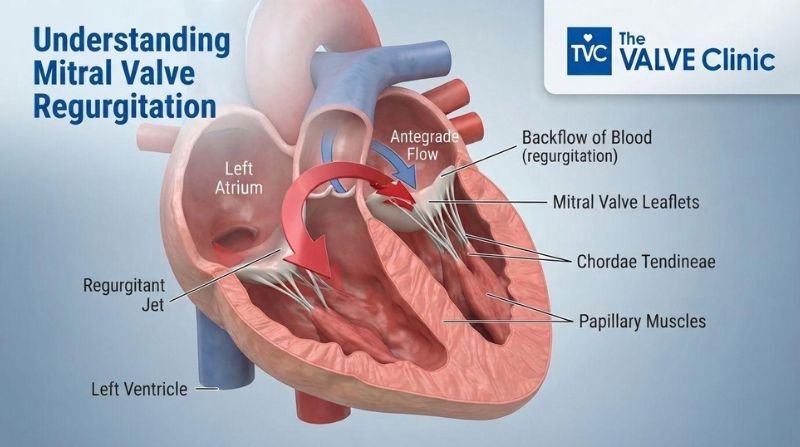
Understanding Mitral Valve Regurgitation
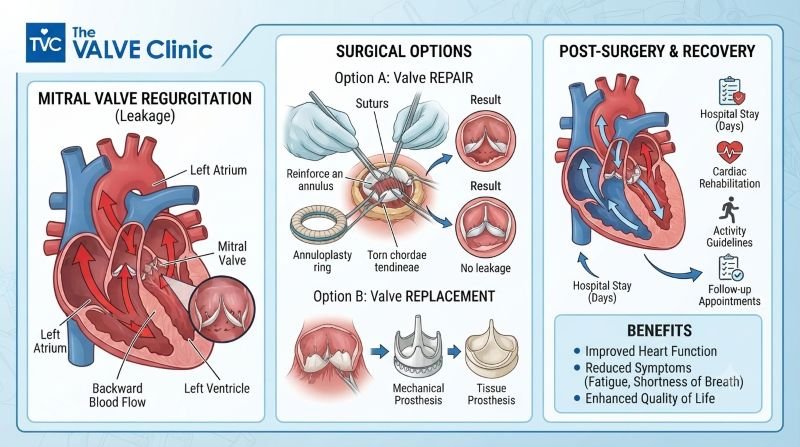
Mitral valve regurgitation occurs when the mitral valve fails to close tightly, allowing blood to leak backward into the left atrium. Over time, this extra workload can enlarge the heart, reduce pumping efficiency, and lead to symptoms such as breathlessness, fatigue, and reduced exercise tolerance.
If you’re wondering whether you’re a suitable candidate for MitraClip treatment , understanding when TEER is recommended is the first step. This minimally invasive approach is considered for selected patients with significant mitral valve leakage after a detailed echocardiographic evaluation.
What Is TEER?
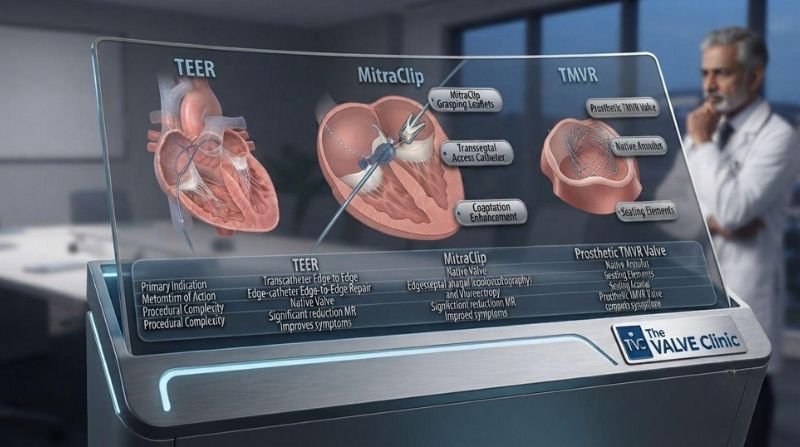
Transcatheter Edge-to-Edge Repair (TEER) is a minimally invasive technique that repairs a leaking mitral valve without removing it. Instead of replacing the valve, a small clip is delivered through a catheter and positioned to bring the valve leaflets together, reducing the leak.
Many patients searching for MitraClip treatment are actually referring to TEER, because MitraClip is one of the devices used to perform this procedure.
How TEER Works
During TEER:
- A catheter is inserted through the femoral vein in the groin.
- Advanced echocardiography guides the catheter safely to the heart.
- The clip is placed across the leaking portion of the mitral valve.
- Blood leakage is reduced while preserving your natural valve.
Compared with open surgery, TEER generally offers shorter hospital stays and quicker recovery for appropriately selected patients.
MitraClip: The Most Established TEER Device
MitraClip is the most established device used for TEER and has extensive long-term clinical experience in treating both degenerative and functional mitral valve regurgitation.
When do I recommend MitraClip?
I consider MitraClip when:
- The valve anatomy is suitable for repair.
- The leak is moderate-to-severe or severe.
- Open-heart surgery carries increased risk.
- Preserving the patient’s native mitral valve is the preferred strategy.
For many elderly or high-risk patients, MitraClip can significantly reduce symptoms while avoiding conventional surgery.
Know more about Why Cardiologists Recommend Mitral Valve Clip Procedure for High-Risk Patients
MyClip: A New-Generation TEER System
MyClip follows the same TEER principle as MitraClip but offers a newer delivery system with enhanced steering and positioning capabilities. It is particularly useful when valve anatomy requires greater procedural flexibility.
Potential advantages of MyClip
Depending on the patient’s anatomy, MyClip may provide:
- Improved catheter manoeuvrability
- Greater positioning precision
- Multiple clip configuration options
- Better control during complex mitral valve repair
Patients do not choose between MitraClip and MyClip, the device is selected based on which one is most appropriate for the individual valve.
TMVR: When Mitral Valve Repair Is Not Possible
Transcatheter Mitral Valve Replacement (TMVR) is fundamentally different from TEER. Instead of repairing the valve, TMVR replaces the diseased mitral valve using a catheter-based approach.
TMVR is generally considered when:
- The valve is too damaged to repair reliably.
- Severe calcification prevents successful clipping.
- Complex structural disease makes TEER unsuitable.
- Replacement is expected to provide a more durable outcome.
TEER vs MitraClip vs MyClip vs TMVR: Complete Comparison
Patient-friendly tip: TEER is the treatment technique, MitraClip and MyClip are devices used for TEER, while TMVR is a valve replacement procedure.
|
Feature |
TEER | MitraClip | MyClip |
TMVR |
|
What it is |
A minimally invasive mitral valve repair technique | A device used to perform TEER | A newer TEER repair device | A minimally invasive mitral valve replacement procedure |
|
Treatment goal |
Repair the leaking valve | Repair the leaking valve | Repair the leaking valve |
Replace the damaged mitral valve |
| Native valve preserved? | Yes | Yes | Yes |
No |
|
Procedure type |
Catheter-based | Catheter-based | Catheter-based |
Catheter-based |
|
Access route |
Through the femoral vein (groin) | Through the femoral vein | Through the femoral vein |
Usually transcatheter (device dependent) |
|
Best suited for |
Repairable mitral valve regurgitation | Suitable anatomy for TEER | Complex anatomy requiring enhanced steering |
Valves that cannot be repaired effectively |
|
Recovery |
Usually 1–3 days | Similar to TEER | Similar to TEER |
Often slightly longer than TEER |
| Main advantage | Preserves the native valve | Extensive clinical evidence | Greater positioning flexibility |
Complete valve replacement |
How Do We Decide Which Treatment Is Right?
The decision is never based on the newest device, it is based on your heart.
Before recommending TEER, MitraClip, MyClip, or TMVR, I evaluate:
- The cause of the mitral valve regurgitation
- Valve leaflet structure and mobility
- Severity of the leak
- Left ventricular function
- Symptoms and exercise capacity
- Overall surgical and procedural risk
Advanced echocardiography and cardiac CT allow us to determine whether mitral valve repair is likely to succeed or whether TMVR would provide a better long-term result.
Dr. Ankur Phatarpekar’s Clinical Perspective
One of the most common questions I hear is, “Should I choose MitraClip, MyClip, or TMVR?”
My answer is always the same: the procedure should fit your valve, not the other way around.
I begin by carefully reviewing your echocardiogram, valve anatomy, heart function, and overall health. If your valve can be repaired effectively, preserving your natural valve through TEER is often the preferred approach. When repair is unlikely to provide a durable result, TMVR becomes a more appropriate solution.
The best treatment is the one that offers lasting benefit with the lowest possible risk for you.
Frequently Asked Questions
Patients researching TEER vs MitraClip vs MyClip vs TMVR often ask these questions before deciding on treatment.
Q. Is TEER the same as MitraClip?
No. TEER is the minimally invasive repair technique, while MitraClip is one of the devices used to perform that technique.
Q. What is the difference between MitraClip and MyClip?
Both are devices designed for TEER. The difference lies mainly in the delivery system, steering capability, and procedural flexibility rather than the treatment principle.
Q. When is TMVR recommended instead of TEER?
TMVR is considered when the mitral valve cannot be repaired successfully because of severe structural damage, calcification, or unsuitable anatomy for clipping.
Q. How long is recovery after a MitraClip procedure?
Most patients undergoing MitraClip (TEER) begin walking within a day and are discharged within one to three days, depending on their overall health. You can watch this to more information about the Mitraclip procedure.
Q. Can mitral valve regurgitation come back after TEER?
Yes. Although TEER significantly reduces leakage, regular follow-up with echocardiography is essential to monitor long-term valve function.
Q. Is MitraClip suitable for elderly patients?
Yes. Many elderly patients with severe mitral valve regurgitation who are considered high-risk for surgery may benefit from MitraClip after careful evaluation.
A Personal Note from Dr. Ankur Phatarpekar
If you’ve been diagnosed with mitral valve regurgitation, my priority is to help you understand every option clearly before recommending treatment. Together, we’ll determine whether TEER, MitraClip, MyClip, or TMVR is the safest and most appropriate solution for your heart.
Dr. Ankur Phatarpekar
The Valve Clinic
Phone: +91 90045 06263
Email: thevalveclinic@gmail.com
Address: 11th Floor, Diamond Plaza, Chhabildas Road, Dadar West, Mumbai – 400028, Maharashtra, India
If you already have an echocardiogram or have been advised to consider MitraClip or TMVR, I can review your reports and explain the most suitable treatment pathway.