Heart failure diagnosis involves more than a single test. It usually combines your symptoms, medical history, physical examination and diagnostic tests such as blood tests, an ECG and an echocardiogram. These tests help determine whether heart failure is present, how well the heart is functioning, what may be causing it and which type of heart failure you may have.
What Is Heart Failure Diagnosis?
When I assess someone for possible heart failure, I am not looking for one isolated abnormal result. I look at the complete clinical picture.
Heart failure means the heart is unable to pump or fill adequately to meet the body’s needs. It can develop because of conditions such as coronary artery disease, previous heart attack, high blood pressure, cardiomyopathy, abnormal heart rhythms or heart valve disease.
The first step is understanding what you are experiencing and how those symptoms have changed over time. I then combine that information with examination findings and appropriate investigations.
Early assessment matters because symptoms such as breathlessness, tiredness or reduced exercise capacity can have many causes. Finding the underlying problem early can make it easier to address the condition before heart function or fluid balance worsens.
If you want to understand the broader approach to recognising cardiovascular problems earlier, you can also read our guide to early detection of heart disease.
What Heart Failure Symptoms Can Lead to a Diagnosis?
Heart failure symptoms can develop gradually, so they are sometimes mistaken for ageing, lack of fitness or another medical problem. The pattern and progression of symptoms are important clues during an evaluation.
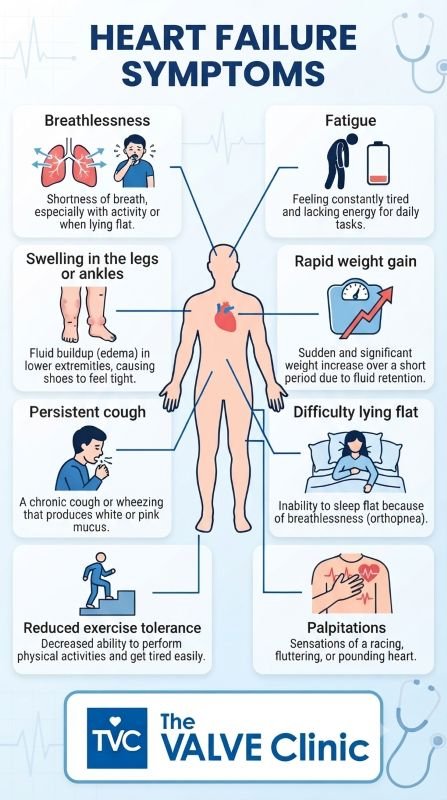
Common symptoms include:
- Breathlessness: You may become short of breath while walking, climbing stairs or doing activities that were previously comfortable.
- Fatigue: Everyday activities may leave you unusually tired because the heart and body are not maintaining adequate circulation efficiently.
- Swelling in the legs or ankles: Fluid can accumulate in the tissues, particularly around the lower legs and feet.
- Rapid weight gain: A sudden increase over a few days may reflect fluid retention rather than an increase in body fat.
- Persistent cough: Fluid congestion can sometimes contribute to an ongoing cough or wheezing.
- Difficulty lying flat: Some people find that breathing becomes more difficult when lying down and feel more comfortable sleeping with their upper body elevated.
- Reduced exercise tolerance: Activities such as walking, shopping or climbing stairs may become increasingly difficult.
- Palpitations: A fast, irregular or noticeable heartbeat can occur, particularly when an abnormal rhythm is contributing to symptoms.
These symptoms do not automatically mean you have heart failure. Breathlessness, fatigue and swelling can occur with lung disease, anaemia, kidney problems, thyroid disorders and other conditions. That is why the diagnostic process matters.
How Is Heart Failure Diagnosed?
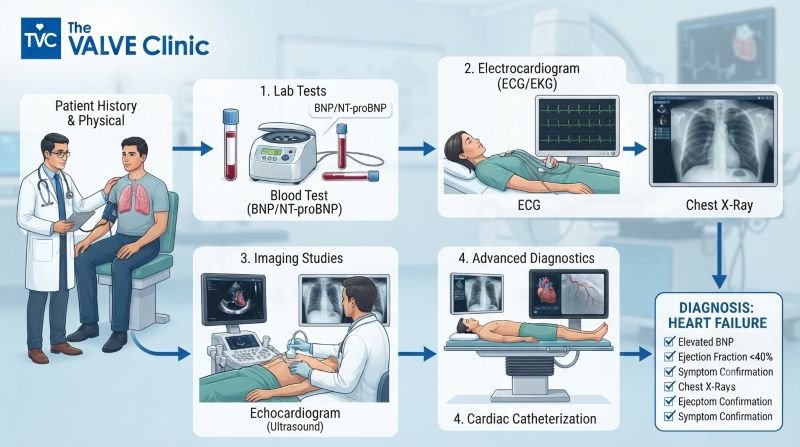
How is heart failure diagnosed? Heart failure diagnosis usually begins with a detailed medical history and physical examination, followed by tests that assess the heart’s structure, rhythm, pumping function and possible underlying cause. No single investigation is sufficient in every patient.
Medical history and physical examination
I will usually ask when your symptoms began, whether they are getting worse and what activities bring them on. I may also ask about previous heart disease, high blood pressure, diabetes, kidney disease, previous heart attacks, valve problems, medications and family history.
During the examination, I may look for signs such as swelling, changes in heart rate, abnormal heart sounds, raised venous pressure or evidence of fluid accumulation.
Blood tests
Blood tests can provide information about kidney function, electrolytes, blood count, thyroid function and other conditions that may contribute to symptoms or influence treatment.
Two important biomarkers are BNP (B-type natriuretic peptide) and NT-proBNP (N-terminal pro-B-type natriuretic peptide). These substances can become elevated when the heart is under increased pressure or strain. However, they should not be treated as a simple yes-or-no test for heart failure. Other cardiac and non-cardiac conditions can affect their levels, so I interpret them alongside your symptoms, examination and other investigations.
Electrocardiogram (ECG)
An ECG records the electrical activity of your heart. It can identify rhythm abnormalities, conduction problems and patterns that may suggest previous heart damage or other cardiac conditions.
An ECG does not by itself confirm or exclude every form of heart failure, but it is an important part of the initial evaluation.
Echocardiogram
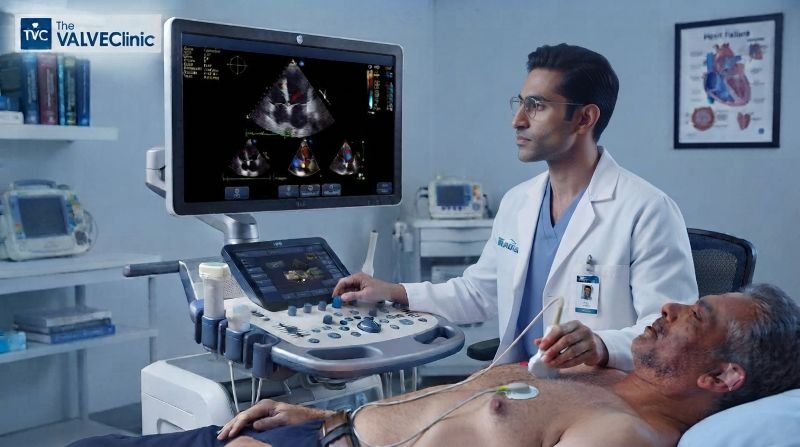
An echocardiogram is one of the most useful investigations when heart failure is suspected. It uses ultrasound waves to examine the heart without exposing you to radiation.
It can show how well the heart chambers are working, measure ejection fraction, assess valves and identify structural or functional abnormalities.
Chest X-ray and other investigations
A chest X-ray can provide clues such as an enlarged heart or congestion in the lungs, while also helping doctors consider other causes of breathlessness.
Depending on the clinical situation, additional investigations may include cardiac MRI, CT imaging, stress testing, nuclear imaging or cardiac catheterization. These are not necessary for everyone. The choice depends on what the initial evaluation suggests.
What Does an Echocardiogram for Heart Failure Show?
An echocardiogram for heart failure gives us much more information than simply whether the heart is “weak.”
It can help assess:
- Ejection fraction: This estimates the percentage of blood pumped out of the left ventricle with each heartbeat.
- Heart chamber size: Enlargement of the chambers can provide clues about chronic pressure or volume changes.
- Heart muscle movement: Abnormal movement of particular areas may suggest previous heart damage or reduced blood supply.
- Valve function: Aortic, mitral, tricuspid and pulmonary valve abnormalities can contribute to or worsen heart failure.
- Heart muscle thickness: Thickening can occur in conditions such as long-standing high blood pressure.
- Filling function: Echocardiography can provide information about how the heart relaxes and fills.
- Pressure-related findings: Certain measurements can help estimate whether pressures inside the heart and lungs are elevated.
The ejection fraction is particularly useful, but it is important not to interpret it in isolation. A person can have heart failure even when the ejection fraction is not reduced. In heart failure with preserved ejection fraction, the heart may contract relatively normally but have difficulty relaxing and filling properly.
What Are the Heart Failure Diagnostic Tests?
Heart failure diagnostic tests are selected according to your symptoms, medical history and initial examination. They may include:
- Blood tests: BNP or NT-proBNP, kidney function, electrolytes, blood count, thyroid testing and other investigations where appropriate.
- ECG: Looks at heart rhythm and electrical conduction.
- Echocardiogram: Evaluates heart structure, pumping function, chamber dimensions, valve function and other important measurements.
- Chest X-ray: May show heart enlargement or pulmonary congestion and can help identify other causes of respiratory symptoms.
- Cardiac MRI or CT: Used selectively when additional structural or tissue information is needed.
- Stress testing: May be useful when symptoms occur mainly during exertion or when doctors need to assess how the heart responds to exercise.
- Cardiac catheterization: In selected patients, invasive pressure measurements or coronary assessment may be required to clarify the diagnosis or identify an underlying cause.
The important point is that these investigations complement one another. The aim is not simply to label a patient as having heart failure, but to understand why it has developed, how the heart is functioning and what other conditions may be contributing.
How Doctors Determine the Type of Heart Failure
Once heart failure is suspected or established, the next step is to understand the heart’s pumping function and the mechanism involved.
One important classification is based on the left ventricular ejection fraction (LVEF):
- HFrEF – Heart Failure With Reduced Ejection Fraction
HFrEF generally refers to heart failure with an LVEF of 40% or below.
In these patients, the left ventricle has reduced systolic pumping function. Previous heart attacks, coronary artery disease, cardiomyopathy and other conditions can contribute to this form of heart failure.
- HFmrEF – Heart Failure With Mildly Reduced Ejection Fraction
HFmrEF refers to an LVEF of approximately 41–49%.
This group sits between reduced and preserved ejection fraction, and the clinical context is important when interpreting the result. The trajectory of ejection fraction over time and the underlying cause may also provide useful information.
- HFpEF – Heart Failure With Preserved Ejection Fraction
HFpEF generally refers to an LVEF of 50% or higher, but a preserved ejection fraction does not mean that the heart is necessarily functioning normally.
The diagnosis requires the clinical picture to be supported by objective evidence, such as increased filling pressures or other structural and functional abnormalities. Conditions including high blood pressure, diabetes, obesity, coronary artery disease and atrial fibrillation may be associated with HFpEF.
What Happens After a Heart Failure Diagnosis?
A diagnosis is the beginning of the evaluation, not the end.
Once heart failure has been identified, I want to understand what caused it and whether that cause can be treated or controlled.
Depending on the individual patient, this may involve assessing for:
- Coronary artery disease or previous heart attack
- High blood pressure
- Abnormal heart rhythms
- Cardiomyopathy
- Heart valve disease
- Diabetes and kidney disease
- Thyroid abnormalities
- Anaemia or iron deficiency
- Other less common causes of heart muscle dysfunction
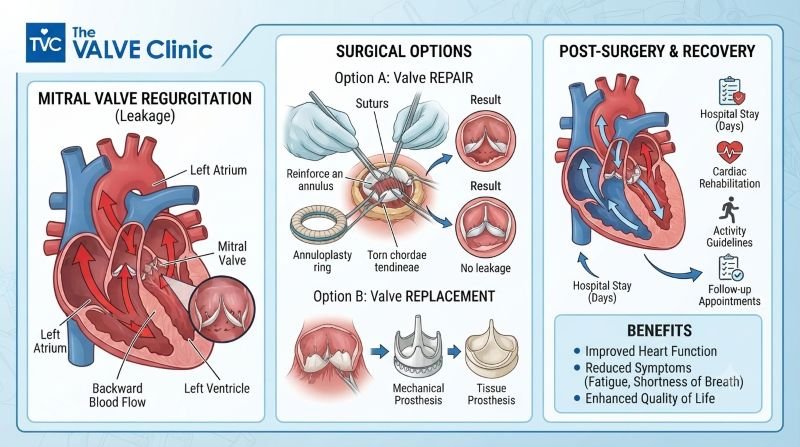
Valve disease deserves particular attention because significant aortic or mitral valve disease can place additional pressure or volume load on the heart. In selected patients, treating the underlying valve problem may form an important part of the overall management strategy.
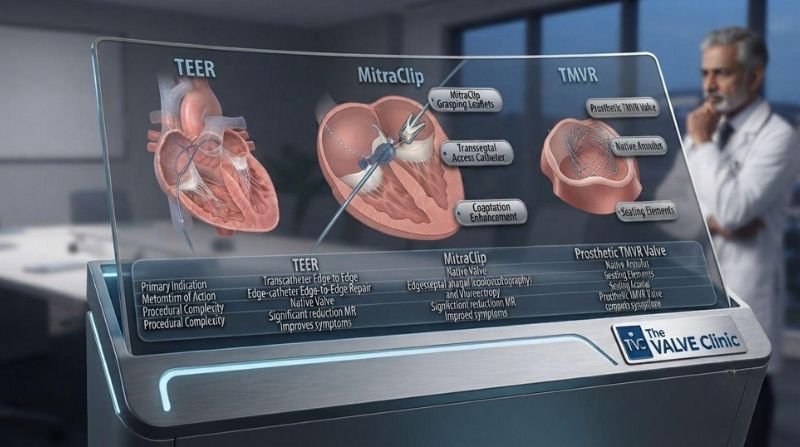
For patients whose heart failure is related to significant valve disease, procedures such as TAVI, TMVR or balloon mitral valvotomy may be considered depending on the valve involved, severity of disease, anatomy and overall health.
The appropriate approach is individual. A procedure should be recommended because it addresses a specific problem, not simply because it is available.
When Should You See a Cardiologist for Possible Heart Failure?
You should arrange a cardiac evaluation if you develop unexplained or progressively worsening breathlessness, persistent fatigue, swelling of the legs or ankles, reduced exercise capacity, difficulty breathing when lying down or unexplained rapid weight gain.
You should not simply assume that these symptoms are part of normal ageing.
Urgent medical assessment is appropriate when symptoms are sudden or severe, particularly when there is significant breathlessness at rest, chest discomfort, fainting, severe weakness or a rapid deterioration in your condition.
Early evaluation can help distinguish heart failure from other causes of similar symptoms and identify problems that may be treatable.
Dr. Ankur Phatarpekar Clinical Perspective
When someone comes to me with breathlessness or reduced exercise capacity, I try not to jump directly to the conclusion that it is heart failure.
There are many possible explanations, and my first responsibility is to understand the pattern. I want to know whether symptoms occur with exertion or at rest, whether they are progressing, whether there is swelling or difficulty lying flat, and whether there is a history of hypertension, coronary disease, rhythm problems or valve disease.
The echocardiogram is particularly valuable because it allows me to look beyond symptoms. I can assess the heart muscle, ejection fraction, chamber dimensions, valves and several measurements that help me understand how the heart is functioning.
I also pay attention to the possibility of valve disease. A patient may present with what appears to be heart failure, but the underlying problem may be significant aortic or mitral valve disease. In that situation, identifying the valve problem is important because it can change the treatment pathway.
I also remind patients that an ejection fraction is only one measurement. A “normal” number does not automatically mean that everything is normal. The symptoms, examination, echocardiographic findings, biomarkers and the overall clinical picture have to fit together.
That is how I approach diagnosis: not by relying on one test, but by putting the individual pieces together and then deciding what needs to be done next.
Heart Diagnostic Services at The Valve Clinic
At The Valve Clinic, our heart diagnostic services focus on understanding why you are experiencing symptoms rather than assuming that every symptom represents the same heart problem. I combine your medical history, physical examination and appropriate cardiac investigations to assess heart function, valve function and possible underlying causes.
If your evaluation suggests significant valve disease, the next step is to determine whether it can be managed with medication and monitoring or whether an intervention may be appropriate. For some patients, catheter-based procedures can provide an alternative to conventional surgery, but the decision depends on the individual clinical and anatomical situation.
If you have already undergone tests elsewhere and are unsure what the results mean, a second opinion can also be useful. Bring your reports and previous imaging with you, and I can help you understand what they show and whether further evaluation is necessary.
Frequently Asked Questions About Heart Failure Diagnosis
These are some of the questions I commonly hear from patients who are concerned about their symptoms or have been advised to undergo cardiac testing.
Q. How is heart failure diagnosed?
Heart failure is diagnosed by combining symptoms, medical history, physical examination and appropriate investigations. These may include blood tests such as BNP or NT-proBNP, an ECG, echocardiography and chest imaging. No single test confirms every case.
Q. What are the most common heart failure symptoms?
Common heart failure symptoms include breathlessness, fatigue, reduced exercise tolerance, swelling of the legs or ankles, difficulty lying flat, persistent cough and unexplained weight gain caused by fluid retention. These symptoms can also occur with other conditions, so medical evaluation is important.
Q. Is an echocardiogram enough to diagnose heart failure?
An echocardiogram is one of the most important tests, but it is not always enough on its own. The result needs to be interpreted alongside your symptoms, examination, medical history and, when appropriate, blood tests and other investigations.
Q. Can you have heart failure with a normal ejection fraction?
Yes. Heart failure can occur with preserved ejection fraction. In HFpEF, the heart may contract relatively normally but have problems with relaxation and filling. Additional objective evidence is important when establishing the diagnosis.
Q. Does a high BNP always mean heart failure?
No. BNP and NT-proBNP can support the diagnosis, but elevated levels can occur in several cardiac and non-cardiac conditions. I interpret these results together with your symptoms, examination and other test findings rather than using the number alone.
Q. Can heart valve disease cause heart failure?
Yes. Significant valve disease can place additional pressure or volume load on the heart and may contribute to heart failure. This is why evaluating valve structure and function during an echocardiogram is an important part of assessing many patients with suspected heart failure.
Speak With Dr. Ankur Phatarpekar
If you have persistent breathlessness, unexplained fatigue, swelling, reduced exercise capacity or an echocardiogram or blood test that has raised concerns, I would encourage you to understand why the result is abnormal rather than simply worrying about the number.
Bring your previous reports and imaging if you have them. My aim is to put the findings into context, identify the underlying problem and explain what options make sense for you.
Phone: +91 90045-06263
Email: thevalveclinic@gmail.com
Address: 11TH FLOOR, DIAMOND PLAZA, 1101, Chabildas Rd, opp. Plaza Cinema, Dadar West, Dadar, Mumbai, Maharashtra 400028 India
— Dr. Ankur Phatarpekar
The Valve Clinic