
Yes, TAVI for 80 year old patients can be an appropriate treatment option when severe aortic stenosis is present and the patient is medically and anatomically suitable. Being 80 does not automatically rule out TAVI. The decision depends on the severity of valve disease, symptoms, overall health, frailty, heart function, anatomy and the patient’s expected quality of life.
For families, however, the important question is not simply, “Is 80 too old for TAVI?” The better question is, “Is TAVI the right treatment for this particular person?”
At this age, I look beyond the number on the birth certificate. I consider the severity of the valve disease, symptoms, heart function, physical strength, other medical conditions, valve anatomy, blood vessels, expected quality of life and the patient’s own wishes.
TAVI for 80 Year Old Patients: Is It Safe and Suitable?
For an 80-year-old with severe symptomatic aortic stenosis, TAVI can be an appropriate treatment option. The ACC/AHA guidelines specifically state that transfemoral TAVI is preferred over surgical aortic valve replacement in many patients older than 80 when the anatomy is suitable.
This does not mean every 80-year-old should automatically undergo TAVI.
The decision should be made after a detailed assessment by a multidisciplinary Heart Team. Guidelines also emphasise considering life expectancy, surgical risk, anatomy, comorbidities, patient preferences and the expected effect of treatment on quality of life.
What Is TAVI Procedure and How Does It Help?
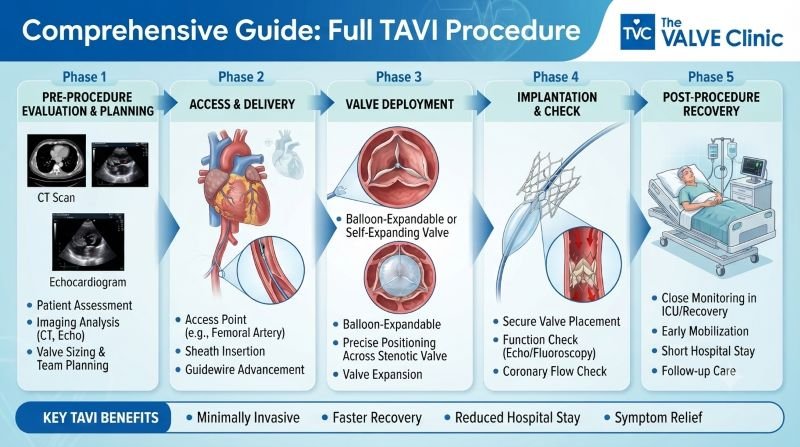
The TAVI procedure replaces a narrowed aortic valve without conventional open-heart surgery.
In a typical transfemoral procedure:
- The patient receives appropriate anaesthesia or sedation.
- A catheter is introduced through an artery, usually in the groin.
- The replacement valve is guided towards the diseased aortic valve.
- The new valve is positioned within the existing valve.
- The replacement valve expands and begins functioning.
- The team checks the valve and surrounding structures before completing the procedure.
The exact approach depends on the patient’s anatomy and medical condition. Imaging such as echocardiography and CT angiography helps the Heart Team determine whether the procedure is technically suitable.
If you want to understand the procedure in more detail, you can read our guide to TAVI surgery and recovery.
Why Can TAVI Be Considered for Older Patients?
Older patients often have a higher risk of complications from major surgery because they may also have conditions such as kidney disease, diabetes, lung disease, previous heart problems or reduced physical strength.
TAVI provides a catheter-based alternative that avoids the large chest incision and heart-lung bypass associated with conventional surgical valve replacement.
For an older person, reducing the physical stress of treatment can be important. The aim is not simply to replace the valve. The aim is to help the patient breathe more comfortably, remain independent and return to meaningful daily activities when treatment is appropriate.
Studies and guideline recommendations have supported TAVI as an important treatment option for older adults with severe aortic stenosis. In the UK TAVI trial, which included patients with a mean age of 81 years, TAVI and surgical replacement were directly compared in older patients with severe symptomatic aortic stenosis.
Aortic Stenosis Treatment: Why Timing Matters
Aortic stenosis occurs when the aortic valve becomes narrowed and restricts blood flow from the heart to the body.
As the disease becomes severe, patients may experience:
- Breathlessness, especially during activity
- Reduced exercise tolerance
- Fatigue
- Chest discomfort
- Dizziness or fainting
- Swelling in the legs
- Difficulty performing everyday activities
Some older people may not describe these symptoms clearly. They may simply stop walking as far, avoid stairs or become less active at home.
That is why families should pay attention to changes in daily function, not only obvious symptoms.
When severe aortic stenosis causes symptoms or affects heart function, valve replacement may become necessary. The appropriate aortic stenosis treatment depends on the patient’s individual clinical situation.
What Factors Determine Whether an 80-Year-Old Can Have TAVI?
Age is important, but it is only one part of the assessment.
Severity of Aortic Stenosis
TAVI is generally considered when the aortic stenosis is severe and there is a clear indication for valve replacement.
An echocardiogram usually provides important information about valve narrowing, blood flow across the valve and heart function.
Symptoms and Quality of Life
I want to know how the valve disease is affecting the person’s actual life.
Can they walk to the bathroom comfortably? Can they climb a few steps? Have they stopped going outside because of breathlessness? Have they been admitted to hospital because of heart failure?
These practical details can be just as important as a test result.
Overall Health and Frailty
An 80-year-old who is active, independent and otherwise reasonably healthy may have a very different risk profile from an 80-year-old who is severely frail or dependent on others for most daily activities.
Frailty, kidney function, lung disease, previous strokes, diabetes and other medical conditions all need consideration.
Valve and Blood Vessel Anatomy
A CT scan helps the Heart Team assess the aortic valve, aorta and blood vessels used to deliver the replacement valve.
If the femoral arteries are too small, heavily diseased or otherwise unsuitable, another approach may need to be considered.
Expected Benefit
The most important question is whether treating the valve is likely to provide meaningful benefit.
For a patient with severe symptomatic aortic stenosis, a successful TAVI may improve symptoms and functional capacity. But if another serious illness limits life expectancy or makes meaningful recovery unlikely, the balance may be different.
This is why treatment decisions should be individualised rather than based on age alone.
TAVI Surgery vs Open-Heart Valve Replacement at 80
When an older patient needs aortic valve replacement, the choice is not automatically between “good” and “bad” treatment.
Both TAVI and surgical aortic valve replacement can be appropriate in selected patients. TAVI generally involves a catheter-based approach, while surgical replacement requires open-heart surgery. The best option depends on factors such as anatomy, surgical risk, life expectancy, valve durability considerations, other cardiac conditions and the patient’s preferences.
For many patients above 80 with suitable transfemoral anatomy, guidelines favour TAVI.
However, there are situations where surgery may still be more appropriate. For example, a patient may have another heart condition that needs surgical treatment at the same time, or the anatomy may not be suitable for a catheter-based approach.
The decision should therefore come from a Heart Team discussion rather than from age alone.
What Is Recovery Like After TAVI for an 80-Year-Old?
One reason TAVI is attractive for appropriately selected older patients is the potential for a relatively rapid recovery compared with conventional open-heart surgery.
Many patients are able to sit up and begin walking soon after the procedure. Hospital discharge depends on the patient’s condition, access site, heart rhythm, kidney function and other factors.
At home, recovery usually focuses on gradually increasing activity, looking after the catheter-entry site, taking prescribed medication and attending follow-up appointments.
An 80-year-old may recover differently from a younger patient. Some people regain their usual activities quickly, while others need additional support with mobility, nutrition or rehabilitation.
Families can help by arranging:
- Safe movement around the home
- Medication support
- Follow-up appointments
- Nutritious meals
- Gradual physical activity
- Monitoring for new or worsening symptoms
The goal is not to rush recovery. It is to help the patient regain independence safely.
Dr. Ankur Phatarpekar Clinical Perspective
In my practice, I do not consider 80 to be a cut-off age for TAVI.
What matters to me is the complete clinical picture. I want to understand how severe the aortic stenosis is, how much it is affecting the patient’s life, how strong and independent the patient is, and whether the anatomy is suitable for a catheter-based valve replacement.

I also speak with the family about what the patient wants. An intervention should have a meaningful purpose. If we believe treating the valve can help the patient breathe better, remain independent and enjoy a better quality of life, I consider that carefully.
On the other hand, I would not recommend TAVI simply because a patient has severe valve narrowing. If another serious condition is likely to determine the patient’s health regardless of the valve treatment, we need to discuss that honestly.
For me, the right decision comes from combining echocardiography, CT imaging, clinical assessment, surgical risk, frailty, other medical conditions and the patient’s goals.
That is why I encourage families not to make a decision based only on age or fear of surgery. A proper Heart Team assessment can tell us much more.
Questions Families Often Ask About TAVI at 80
Families commonly have concerns about whether an older person can tolerate the procedure, how recovery works and whether treatment will genuinely improve daily life. Here are some of the questions I hear most often.
Q. Can an 80-year-old have TAVI?
Yes. TAVI for 80 year old patients can be an appropriate option when severe aortic stenosis is present and the patient has suitable anatomy and an expected meaningful benefit from treatment. Current guidelines favour transfemoral TAVI for many patients over 80 when appropriate.
Q. Is TAVI safer than open-heart surgery for an 80-year-old?
Neither treatment is automatically safer for every patient. For many older patients with suitable anatomy, TAVI can reduce the physical burden associated with open heart surgery. The decision should consider surgical risk, anatomy, other medical conditions and expected quality of life.
Q. What is the recovery time after TAVI for an 80-year-old?
Recovery varies considerably. Many patients can start walking soon after the procedure, but the time needed to return to normal activities depends on overall health, mobility, kidney function, other illnesses and complications, if any.
Q. What tests are needed before a TAVI procedure?
Assessment commonly includes an echocardiogram, ECG, blood tests and CT imaging to evaluate the valve, aorta and blood vessels. Additional tests may be recommended depending on the patient’s medical history.
Q. Is TAVI suitable for every patient with severe aortic stenosis?
No. Some patients may be better suited to surgical valve replacement, while others may not benefit from valve intervention because of severe frailty, other serious illnesses or limited expected benefit. A Heart Team assessment is important before making the decision.
Q. Does age alone make TAVI too risky?
No. Age is an important consideration, but it should not be used as the only reason to deny treatment. Overall health, anatomy, symptoms, frailty, life expectancy and the patient’s goals all matter.
Speak With Dr. Ankur Phatarpekar at The Valve Clinic
If your parent or family member is 80 or older and has been diagnosed with severe aortic stenosis, I would encourage you to understand all reasonable treatment options before making a decision.
At The Valve Clinic, I can review the patient’s existing reports and scans, explain whether a catheter-based approach such as TAVI may be appropriate, and discuss when surgical replacement or continued medical management may make more sense. A second opinion can be particularly useful when a family has been told that open-heart surgery is the only option.
Phone: +91 90045-06263
Email: thevalveclinic@gmail.com
Address: 11th Floor, Diamond Plaza, 1101, Chabildas Rd, opp. Plaza Cinema, Dadar West, Dadar, Mumbai, Maharashtra 400028, India
My goal is not to push you towards one procedure. It is to help you understand the diagnosis, the available options and the likely benefits and risks so that you and your family can make a decision with greater clarity.
Medically Reviewed By
Dr. Ankur Phatarpekar
Interventional Cardiologist | Structural Heart & Valve Specialist
This article is intended for patient education and does not replace an individual medical consultation. The suitability of TAVI must be determined after reviewing the patient’s symptoms, investigations, anatomy, overall health and treatment goals.